Modern data protection regulations, such as GDPR, require explicit user consent before loading scripts or transferring data to third-party providers. AdPresso provides built-in mechanisms to align ad delivery with these legal requirements. The system blocks privacy-critical creatives until the user grants consent through a corresponding banner or tool. This ensures compliant data handling without requiring manual code modifications in your ad management setup.
These settings primarily control the delivery of dynamic or external ad formats. Enabling the privacy feature restricts the output of HTML/Code and HTML5 ad types exclusively, as these formats typically inject third-party scripts or transfer data to external servers.
Standard image ads remain unaffected by these restrictions, because they load directly from your own server and do not trigger external data transfers.
Note on bypassing: Every ad within the affected formats (HTML/Code and HTML5) includes a dedicated checkbox to manually bypass the global privacy settings. This is particularly useful when using text links, product tables, or similar static content implemented via code that does not fetch any data from external sources.
The configuration panel is located in your WordPress dashboard under AdPresso > Settings > Privacy. From there, you can choose between four operational modes.
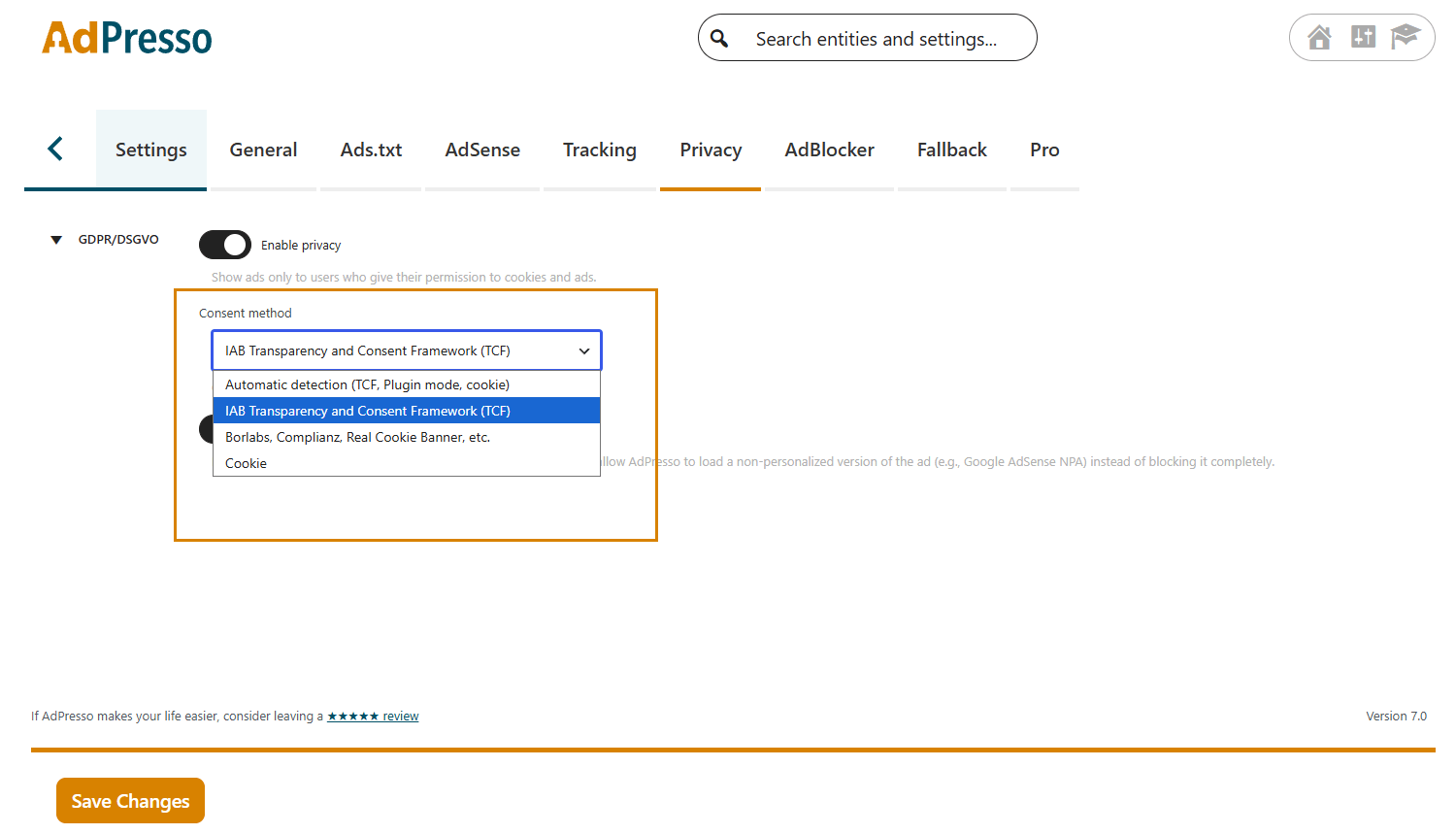
In this mode, AdPresso analyzes your website's existing technical setup. If the system detects an active Transparency and Consent Framework (TCF), it automatically switches to TCF Consent mode. If a local cookie plugin is registered instead, AdPresso switches directly to the Consent Plugin Integration mode.
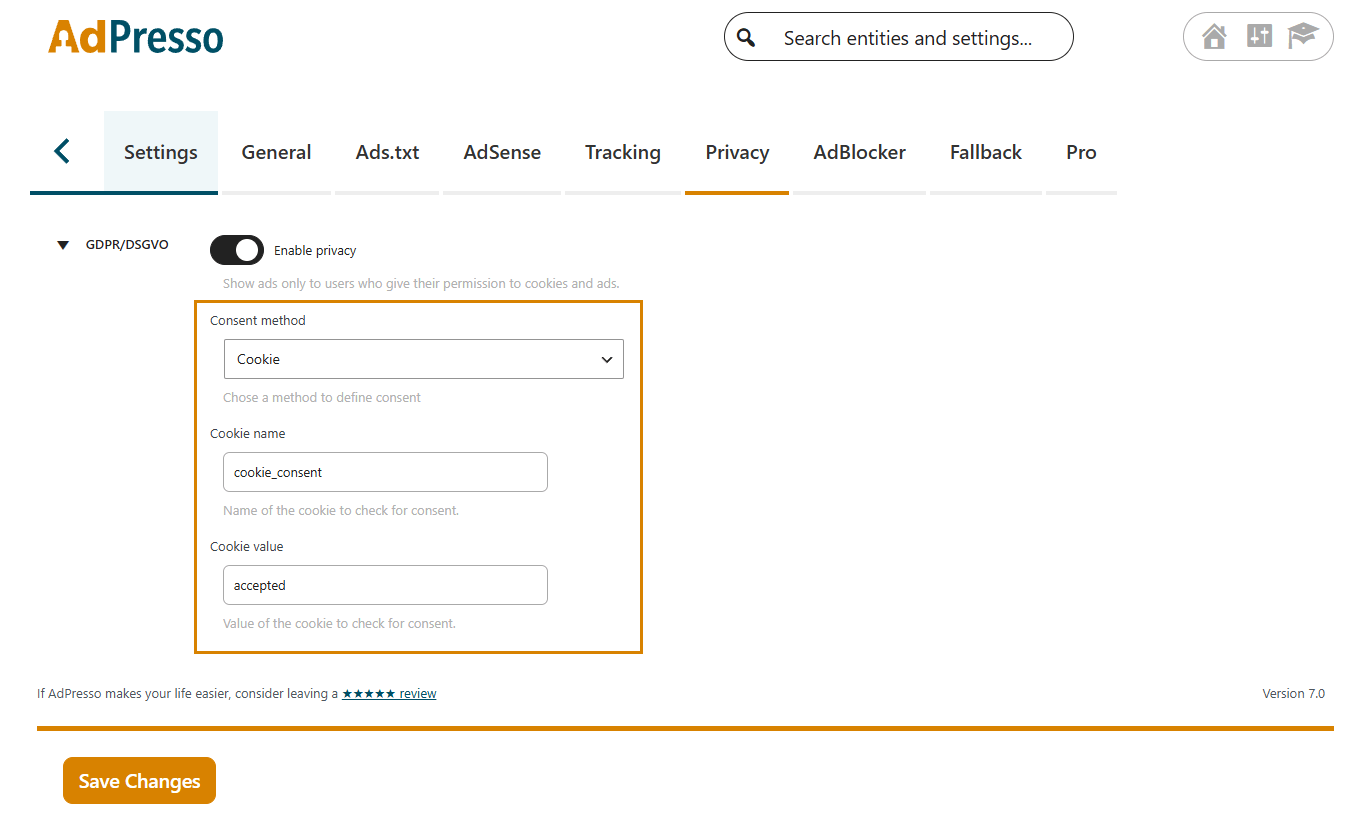
This method applies when your consent solution stores the user's choice in a specific browser cookie. In the AdPresso privacy settings, enter the exact name of the cookie and the required value that indicates consent.
AdPresso delivers the affected ads only if this specific cookie-value combination is active in the user's browser.
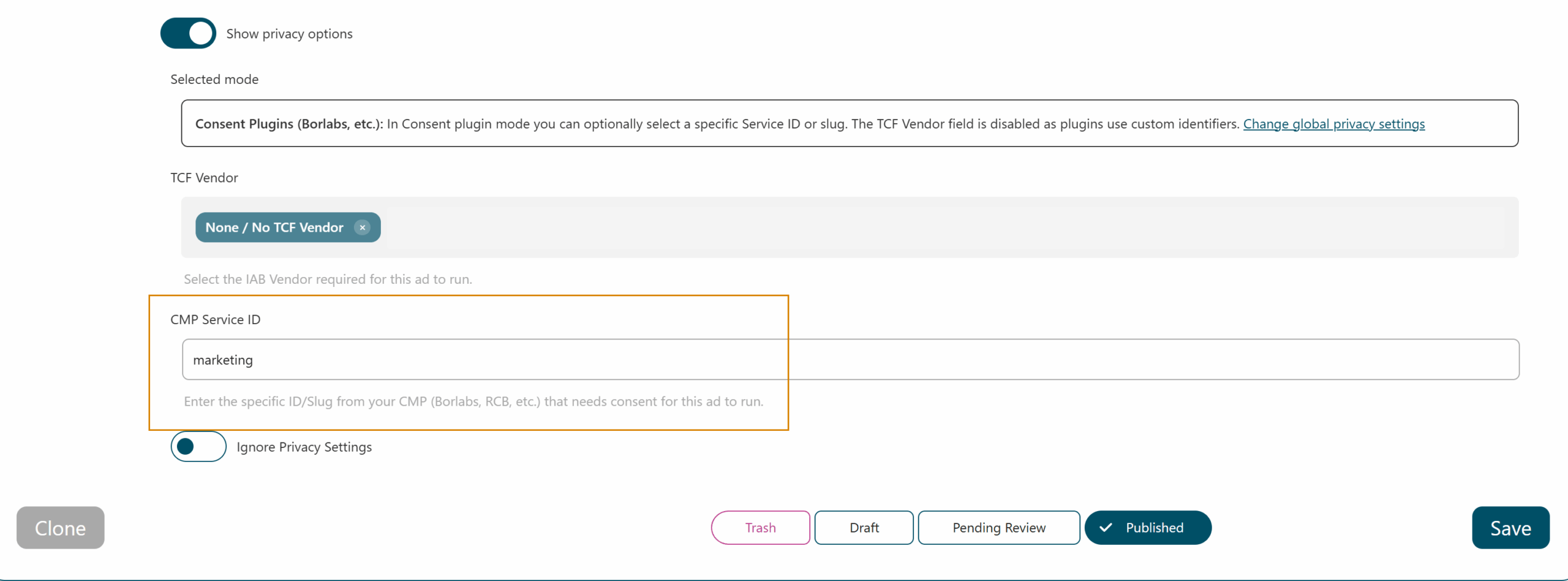
This mode ensures compatibility with third-party consent plugins such as Borlabs, Complianz, or Real Cookie Banner. AdPresso blocks the delivery of privacy-relevant ads until the user provides consent.
You can manage the behavior via specific service IDs:
The Transparency and Consent Framework (TCF) standardizes consent signals across the industry. AdPresso evaluates this data in real time and verifies it against each ad’s requirements. Unlike standard ad managers, AdPresso Pro can block creatives based on individual TCF Vendor consents.
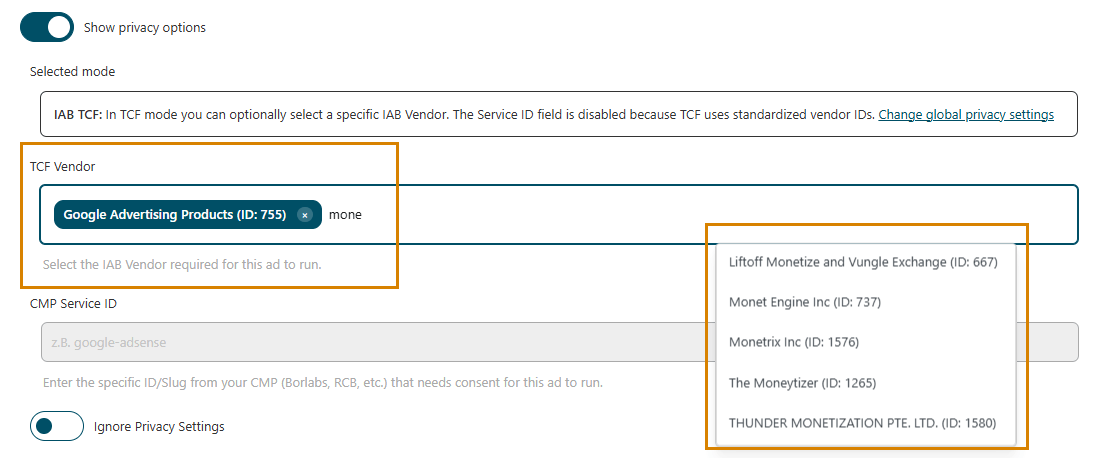
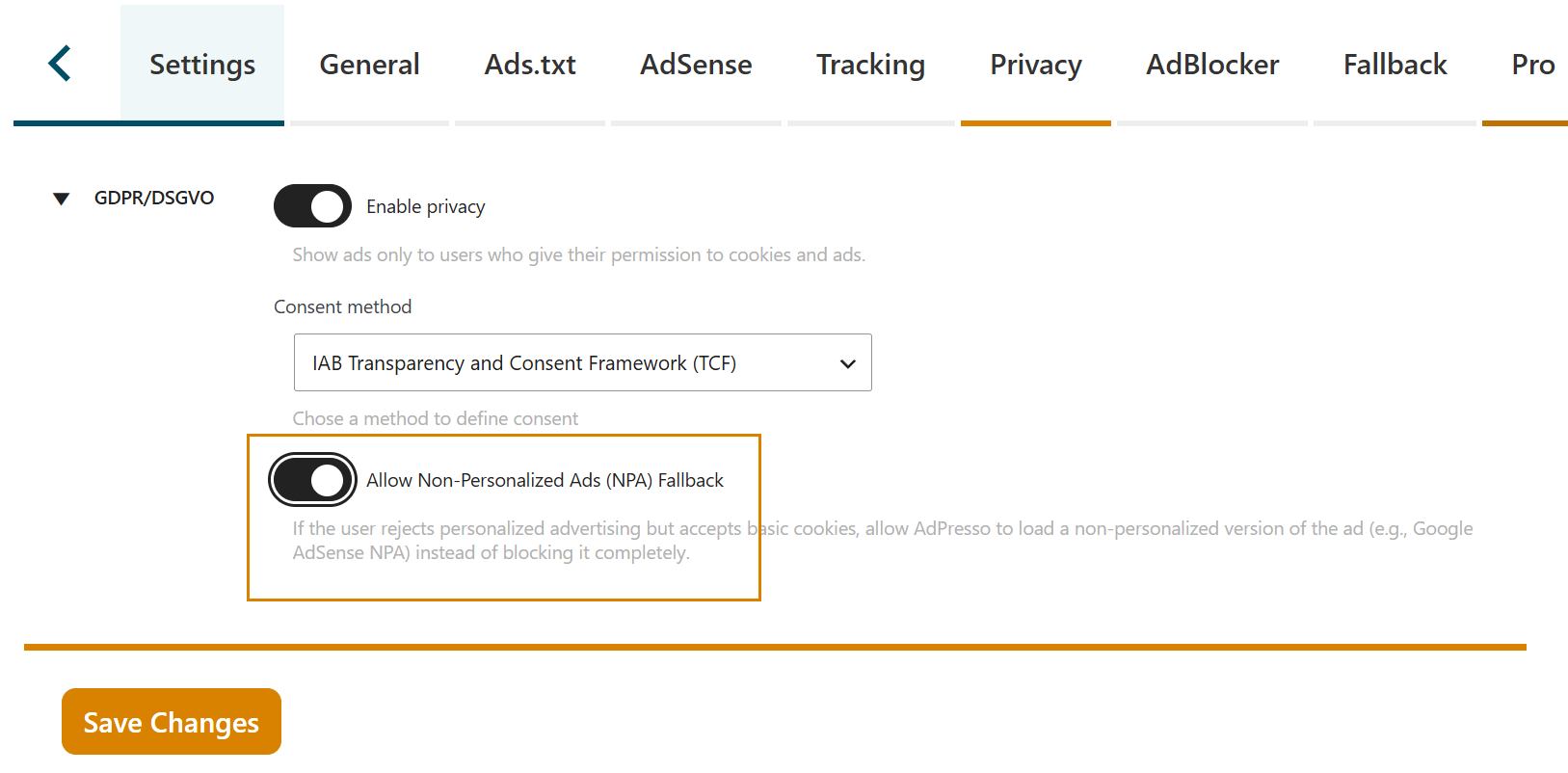
When using the TCF method, an additional checkbox becomes available. If a user rejects personalized advertising but accepts basic cookies, AdPresso does not have to block the creative completely. Instead, this option allows the system to load a non-personalized version of the ad, such as Google AdSense NPA.
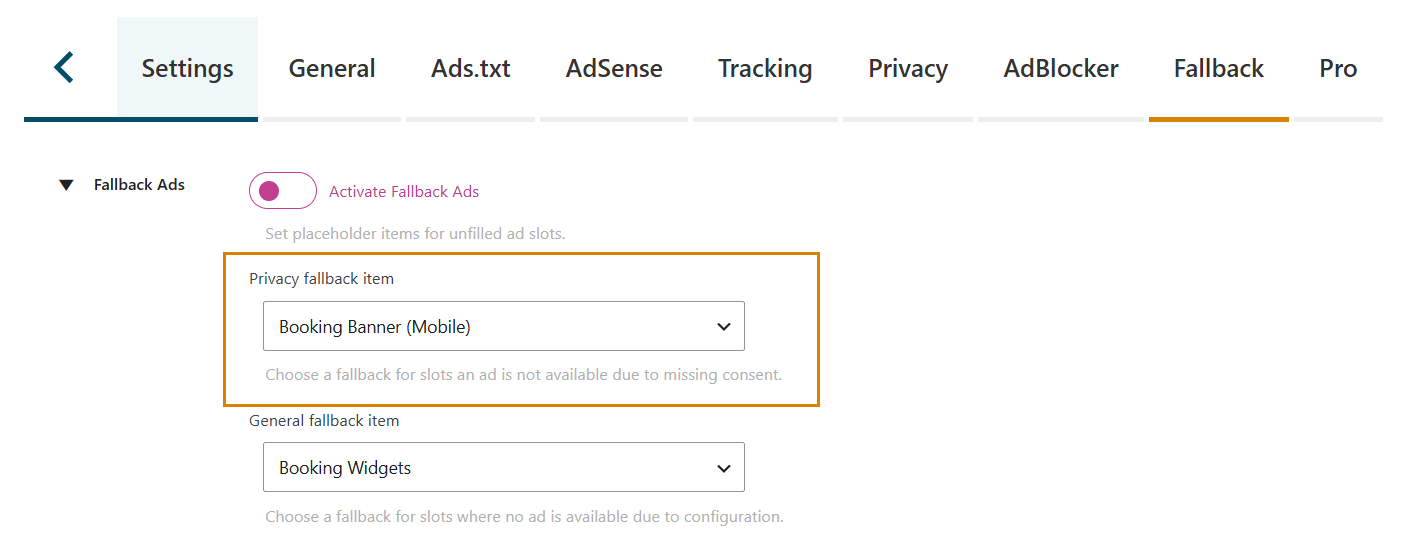
Blocking ads due to missing consent typically leaves empty spaces in your website layout, disrupting the visual structure and reducing potential revenue. AdPresso resolves this issue through an integrated fallback system.
When the system registers a privacy-related block, it does not stop the delivery process. Instead, it automatically switches to a predefined alternative ad or ad group that does not require user consent, such as internal banners or local image ads, to keep your website data-compliant and your ad spaces monetized.
You can configure these alternative assets under AdPresso > Settings > Fallbacks.