Let’s be honest: an ad that no one notices isn’t marketing, it’s just budget quietly slipping away.
Think about that picture hanging in your hallway. The first week, you proudly pointed it out to every guest. A month later, you still noticed it. Today? It’s part of the wall. It doesn’t trigger anything anymore. The exact same thing happens with ads.
Take Marc. The first time he saw that video ad for a software tool, he actually paid attention. By the tenth impression, he already knew the rhythm. By the fiftieth, his brain checked out before the first sentence even started. It’s not that Marc can’t see the ad, but he’s simply tired of it. His attention is gone long before the call to action appears.
That slow fade into irrelevance is what we call ad fatigue, and it’s one of the most underestimated performance killers in digital publishing.
In this tutorial, I’ll walk you through what’s really happening behind the scenes and how you can actively counter ad fatigue on your website to bring your campaigns back to life.
Ad fatigue describes a very specific pattern. Users are repeatedly exposed to the same ad creatives until they gradually stop responding to them.
From a technical perspective, nothing is “broken.” Your ads are still delivered, impressions remain stable, and everything looks fine on the surface. But performance tells a different story. Click-through rates decline, engagement drops, and your campaigns become less efficient.
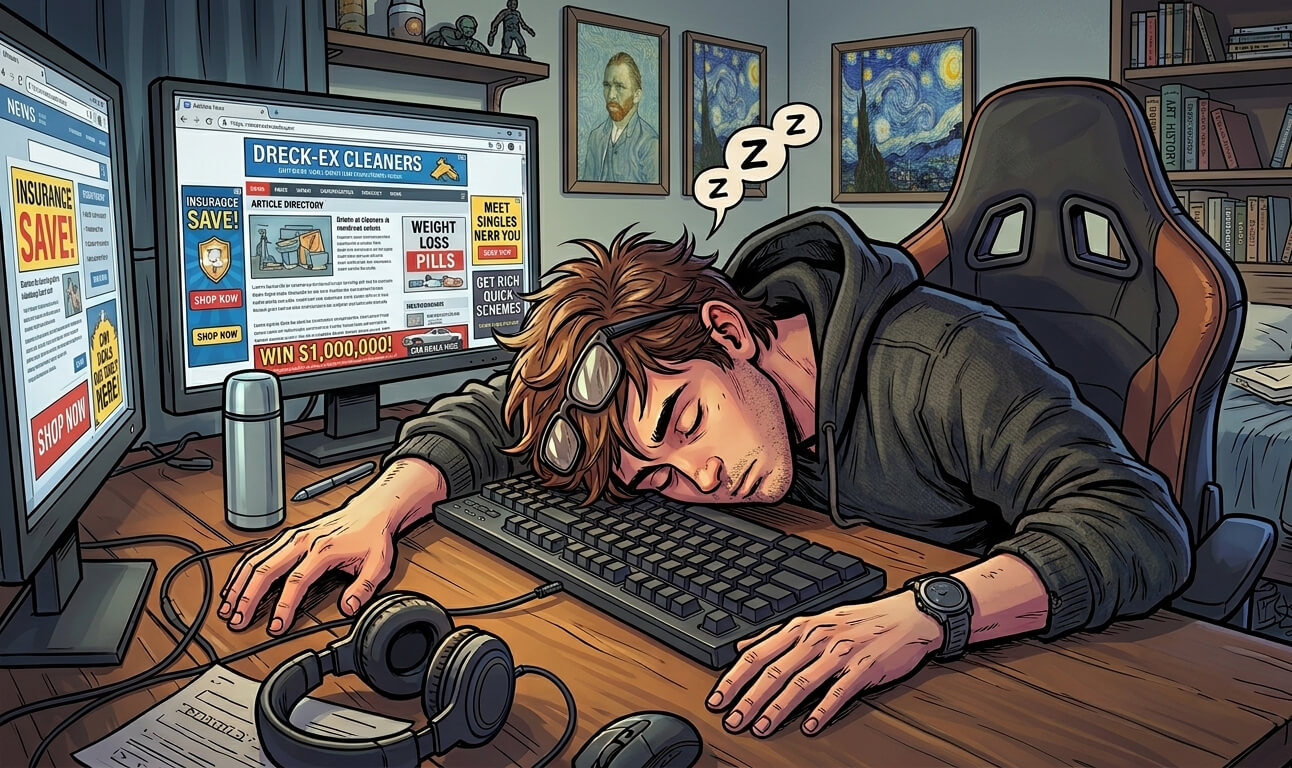
At its core, this isn’t a platform issue. It’s psychology. Evolution wires the human brain to filter out repetition. Scientists know this process as habituation. Once a stimulus loses its novelty, the brain classifies it as irrelevant and mentally ignores it. What initially captured attention becomes background noise surprisingly fast.
In a publishing context, that means your ads don’t disappear; instead, they just stop existing in the user’s perception.
Ad fatigue is deeply rooted in human psychology. The brain automatically filters repetitive stimuli to focus on novelty and relevance, a fundamental survival mechanism that helps us avoid sensory overload and maintain cognitive efficiency.
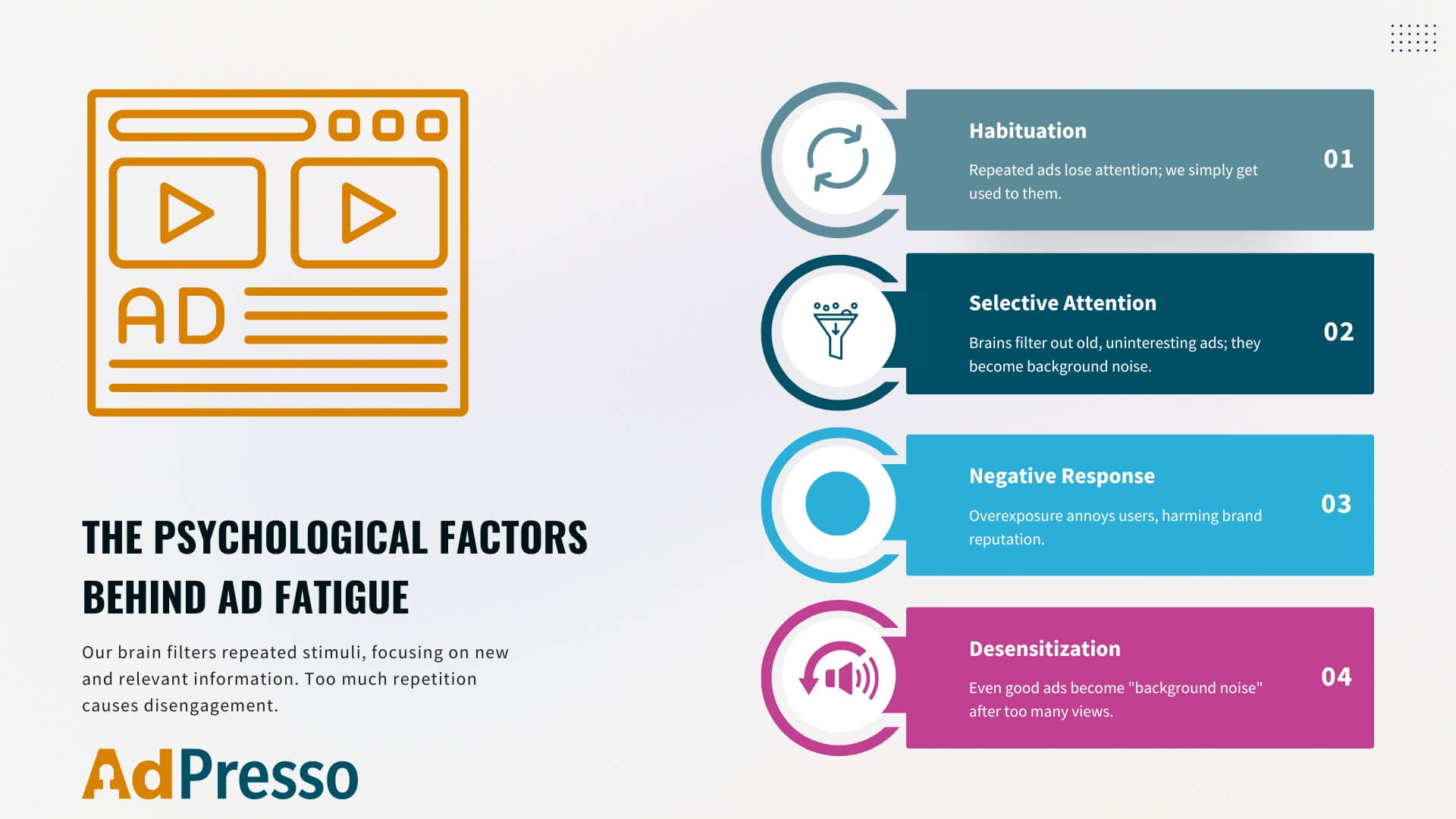
Ad fatigue doesn’t happen randomly. It’s usually the result of a few very predictable patterns and rarely caused by a single issue. It’s usually the combination of:
When these factors stack, performance collapses quietly. The tricky part? You often don’t notice it immediately. Everything looks stable in terms of delivery, while your actual results slowly erode.
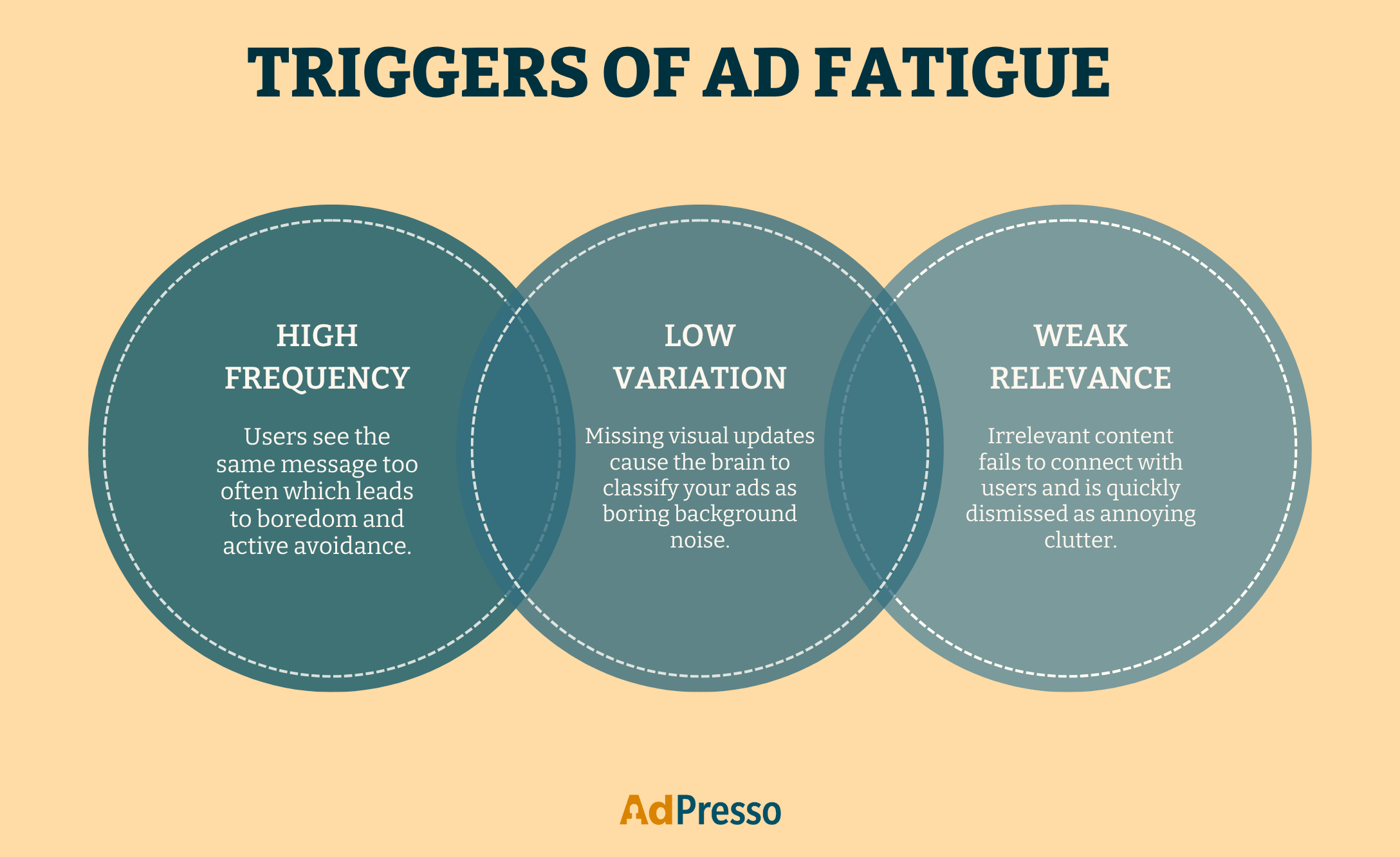
The most common trigger is simply showing the same ad again and again. If identical images, headlines, or videos appear repeatedly within a short time frame, users quickly learn the pattern. Once that happens, their brain starts skipping the ad automatically, similar to classic banner blindness.
Ads that don’t feel relevant accelerate fatigue. If your campaigns speak to everyone, they resonate with no one. Generic messaging like broad discount offers without a clear benefit gets processed as background noise almost instantly.
The more disconnected your ad is from the user’s intent, the faster it burns out.
Even strong creatives have a lifecycle. Running the same ad for weeks or months without updating it is one of the fastest ways to drain performance. What worked initially loses its impact over time and eventually starts working against you.
Ads that feel flat or purely functional don’t hold attention for long. If there’s no story, no personality, and no element of curiosity, the brain cate
The consequences of ad fatigue are far-reaching, directly affecting the bottom line for both advertisers and publishers. As users disengage, campaign metrics tend to dive, sometimes precipitously, leading to lower CTR and engagement. Users become less likely to click on or interact with ads, directly undermining campaign objectives.
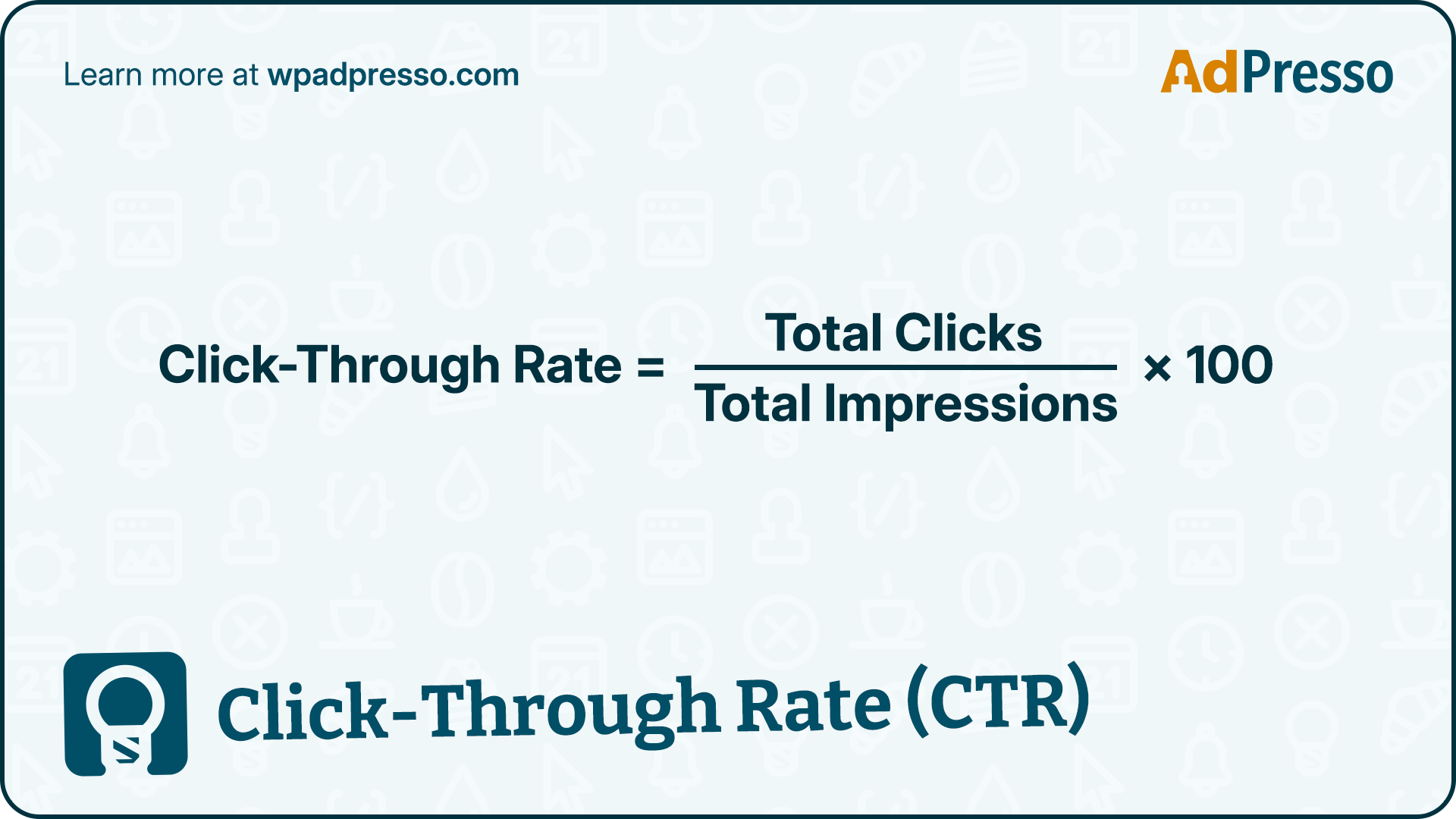
A direct result of this disengagement is higher costs. Declining relevance scores and engagement rates often translate into higher costs per click (CPC) or cost per acquisition (CPA), as advertising platforms’ algorithms deprioritize fatigued ads. This leads to wasted budget, as impressions on tired creatives consume valuable ad spend with little to no return. Ultimately, this leads to lost conversions, as customers stop clicking, purchasing, or taking the intended actions, severely impacting revenue and overall return on investment (ROI).
Beyond immediate financial metrics, ad fatigue also significantly impacts negative brand perception. Fatigued ads can annoy users, especially if they see the same message daily.
Recognizing ad fatigue early is crucial for maintaining campaign health and profitability. Marketers should diligently monitor several key warning signs that indicate declining ad performance.
A steep drop in CTR or engagement after an initial period of stability or growth is often one of the first and most obvious indicators. Similarly, a decline in conversion rates even as reach and impressions remain steady should raise a red flag. An increase in CPM (cost per thousand impressions) or CPA is another clear sign, as platforms' algorithms will penalize ads with declining engagement, making them more expensive to serve.
A spike in ad frequency metrics (the average number of times each user has seen your ad) without a corresponding refresh of creative content is a strong indicator of impending or current fatigue. Finally, negative user feedback, such as comments, ad hides, or reports, provides direct qualitative evidence that your audience is growing tired of your ads. Prompt action upon noticing these signs is essential to mitigate the negative impact on your campaigns.
With a versatile ad management plugin like AdPresso, you’re not stuck watching your performance slowly decline. You have multiple levers to actively counter ad fatigue and keep your inventory engaging over time.
There is no universal blueprint that works for every setup. What performs well always depends on your audience, your niche, and your traffic patterns. That said, there are a few proven strategies that consistently help publishers stabilize click-through rates and extend the lifespan of their campaigns. The key is to treat them as a framework and test what works best on your site.
One of the most effective ways to prevent fatigue is simple. Stop showing the same creative over and over again. Instead of repeatedly serving a single banner, you group multiple different ads into one shared pool. AdPresso then rotates these creatives automatically across your placements. This setup creates natural variation and ensures that users see different messages instead of the same one on repeat.
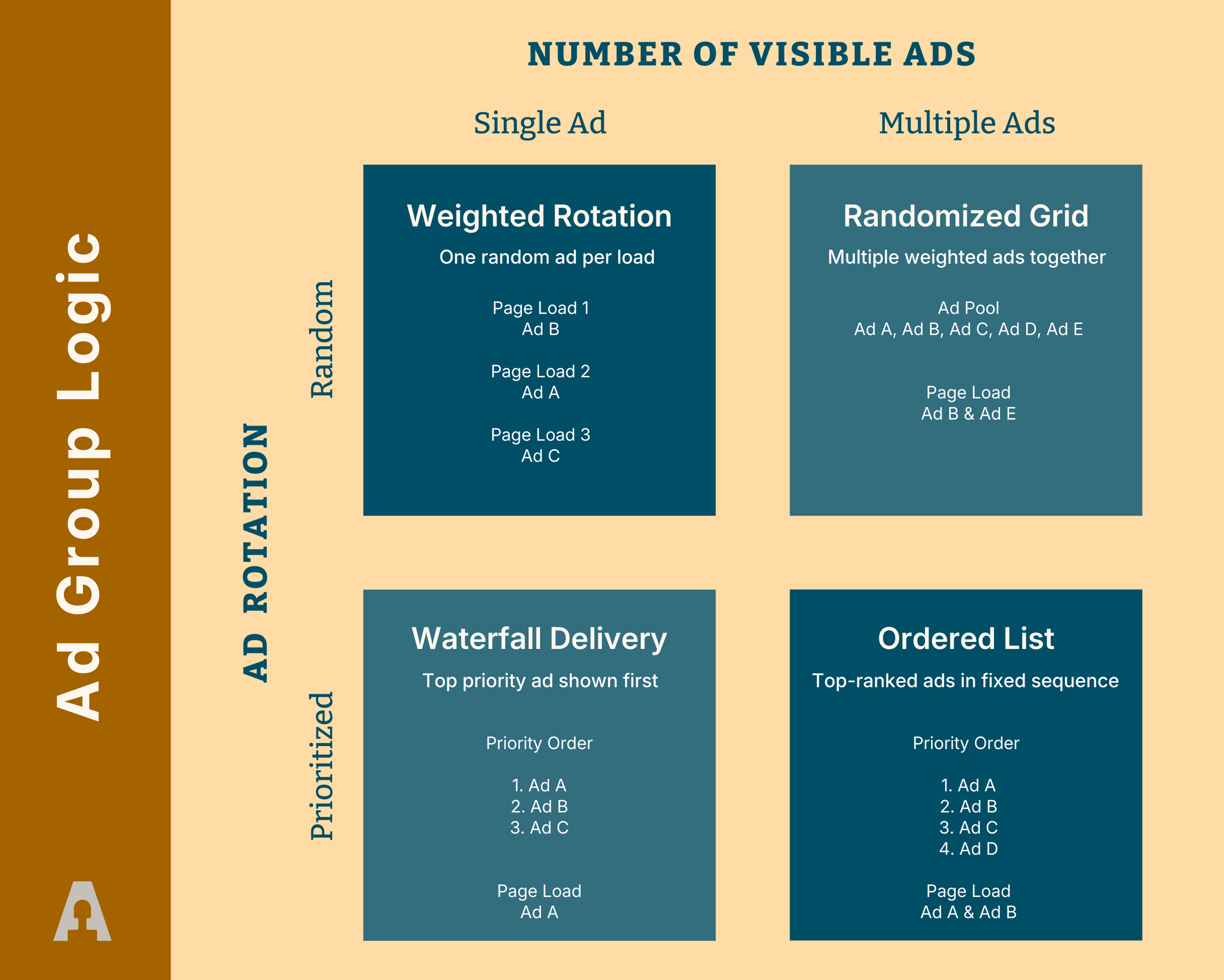
Imagine you run a website about espresso. Instead of showing just two banners for a coffee machine and a pack of beans, you expand your pool to twenty different creatives. These include ads for grinders, portafilters, milk pitchers, and other accessories.
When you run ad rotations across multiple placements within the same page, there is always a risk of duplication. Without proper control, the same ad can appear in multiple positions simultaneously.
The single appearance option in AdPresso solves exactly this problem. Once enabled, a specific ad will only be rendered once per page view. Any additional placements will automatically pull a different creative from the pool to prevent users from seeing the same banner multiple times within a single session.
There is one notable exception. So-called roadblocks intentionally fill all available placements with the creatives of a single advertiser to maximize campaign impact. Even in these setups, performance tends to decline over time as saturation increases.
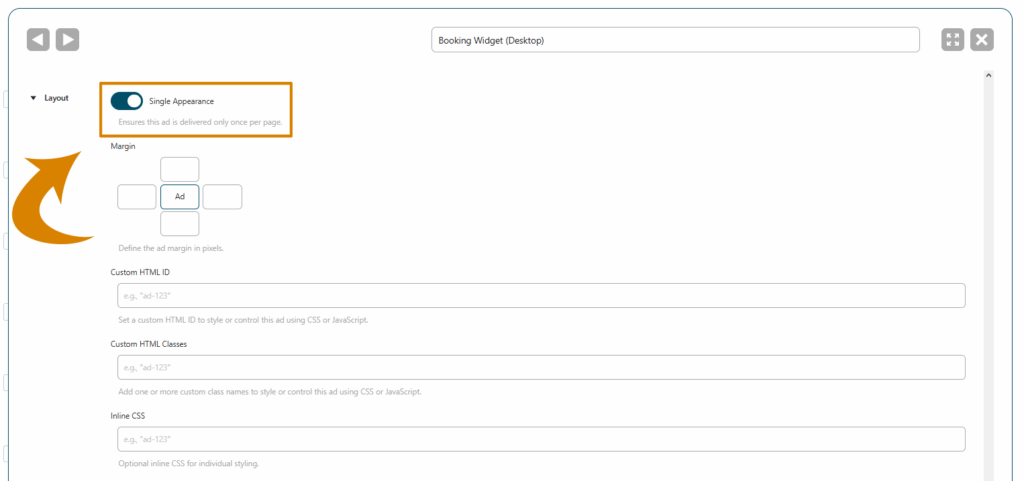
You enable this option for all ads on your espresso website. This ensures a banner promoting a specific coffee machine doesn't appear at both the beginning and end of an article. Instead, the second placement loads a different creative from your pool, increasing visual diversity and keeping the experience more engaging.
Frequency capping gives you direct control over how often a user sees a specific ad. You define a maximum number of impressions per user within a given time frame. Once a visitor reaches that limit, AdPresso stops delivering the ad.
To reduce ad fatigue effectively, apply these limits at the individual-ad level rather than only at the campaign level. This allows for much finer control and prevents overexposure of specific creatives.
You set a frequency cap for a premium coffee machine ad on your espresso site. In your configuration, each user can see this ad only once per day. After a visitor has seen it on one page, it will not appear again on any page of your site for the rest of the day.
Instead, other products from your portfolio take their place, helping maintain user attention and keeping your ad experience varied.
If you want to increase variety even further while making better use of your available placements, sliders and ad refresh are highly effective tools.
A slider cycles through multiple ads within the same placement in a visible sequence. Users can see different creatives as they move through the slider over time. Ad refresh works differently. There is no visible transition. The placement simply reloads at a defined interval, displaying the next ad in the rotation.
Both approaches allow you to present more creatives without requiring the user to reload the page.
Let’s say your espresso website has a rotation of 100 different creatives. To increase exposure, you configure a refresh interval of four seconds. A reader who spends time on a long article about roasting techniques will automatically see a wide range of different ads during their session.
You don’t need complex data models to see the pattern. The closer your ads match a user’s actual interest, the better they perform. When you work with larger ad pools, the real challenge is not quantity. It is precision. You want the right creative to appear in the right context at the right moment. This is where targeting comes into play.
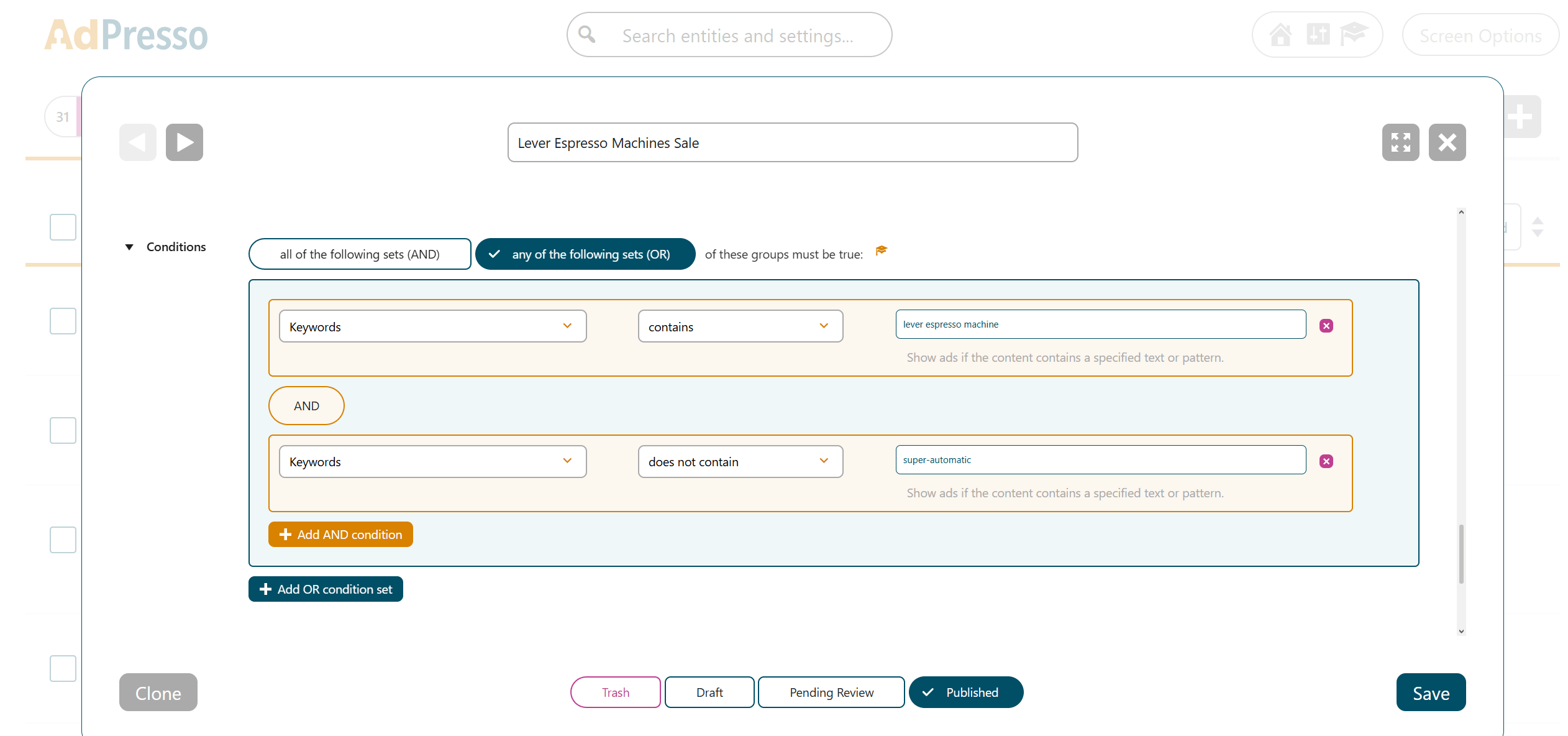
With AdPresso, you can control delivery through logical conditions. AdPresso can link ads to post categories, specific keywords in your content, or even the visitor's origin. This configuration allows you to align your ad creatives with each page's intent rather than distributing them randomly.
The effect is immediate. Ads feel less like interruptions and more like relevant recommendations.
You promote a specific coffee machine only on pages of your espresso website that mention the product by name within the content. At the same time, ads for premium coffee beans are limited to articles that belong to categories focused on roasting and bean varieties. Because the ads blend closely with the surrounding content, users perceive them as useful and relevant rather than as distracting noise.
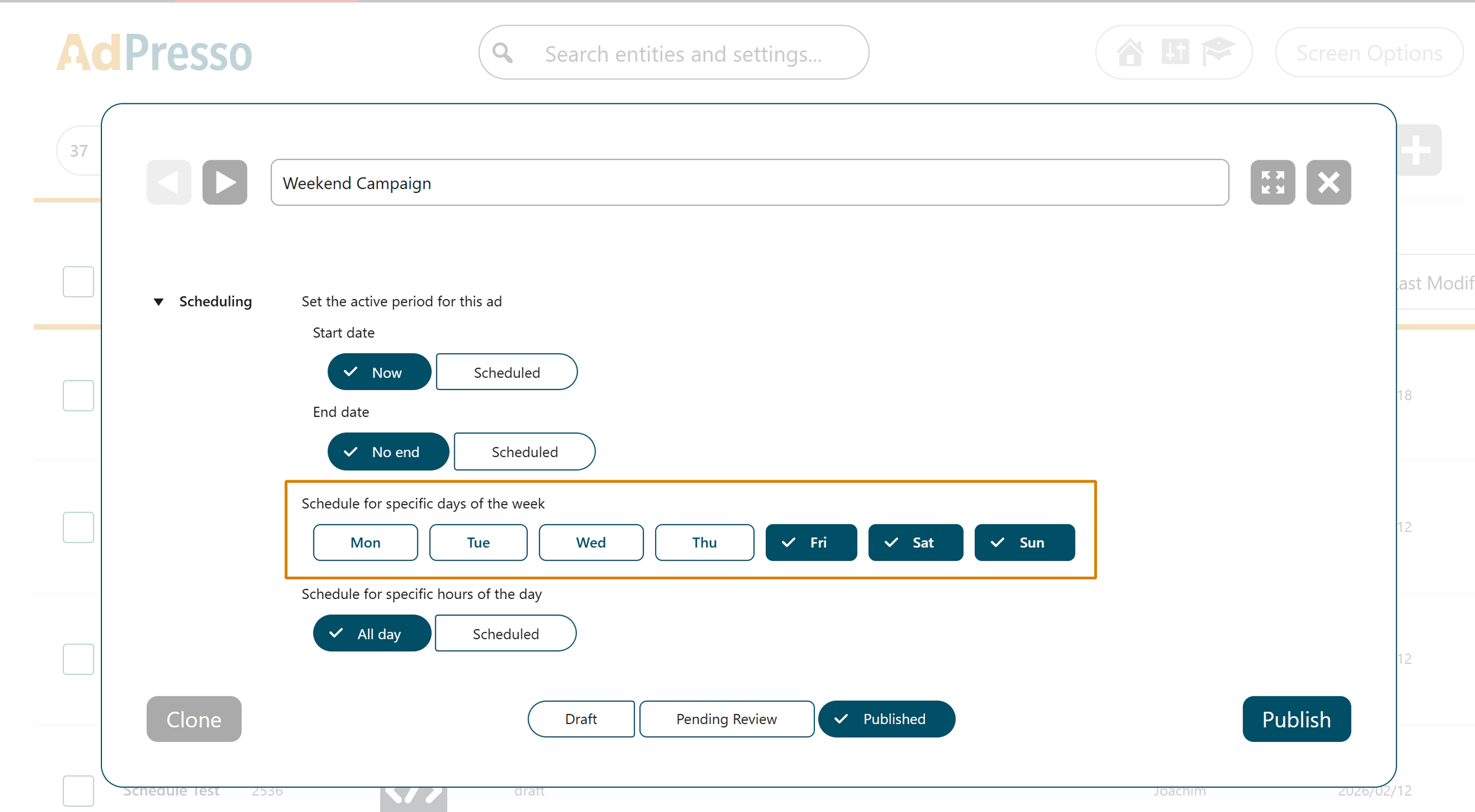
Timing has a direct impact on how your ads perform. By controlling when your ads are delivered, you can improve impression quality and avoid early saturation. Instead of running campaigns continuously, you can limit delivery to specific days or even certain hours when your audience is more likely to respond. At the same time, every creative has a natural lifespan. Even strong ads eventually lose their impact. If you let them run indefinitely, performance will decline without an obvious warning.
AdPresso allows you to define a clear end date from the start. Once the date arrives, the system automatically removes the ad from rotation. This ensures that outdated creatives do not continue to drain performance.
You decide to prioritize ads for high-end coffee machines on weekends because your data shows stronger buying intent during that time. In parallel, you assign a fixed end date to a seasonal campaign promoting a limited batch of coffee beans. Once the promotion period ends, AdPresso automatically removes the ad from rotation.
It's important to distinguish ad fatigue from similar phenomena. Ad fatigue is specifically about overexposure to the same creative, which causes disengagement even when placements, targeting, and formats vary. It's a direct reaction to the repetition of a particular ad message.
In contrast, Banner blindness involves users habitually ignoring ad zones regardless of their content. It's a fixed pattern of attention, not a reaction to overuse of a specific ad. Users have effectively trained themselves to tune out areas of a webpage where ads typically reside.
| Banner blindness | Ad fatigue | |
|---|---|---|
| What is ignored | The placement or format of an ad | The specific advertising message/creative |
| Mechanism | Unconscious filtering out of ad-like areas | Wear-out, boredom, or annoyance due to repetition |
| Focus | Where the ad appears | How often and which specific ad appears |
| Solution | Unusual placements, native ads, fewer ads, better integration | Ad rotation, fresh creatives, frequency capping, audience expansion |
Ad burnout is a broader form of digital overwhelm stemming from too much promotional content, sometimes from multiple brands. It describes a general sense of fatigue or exhaustion from the sheer volume of marketing messages in the digital space, extending beyond any single ad.
While all three phenomena reduce marketing effectiveness, ad fatigue is typically the easiest to directly resolve through creative changes and intelligent frequency management, as it's directly tied to the specific ad and its delivery.
A user sees the same banner for a coffee machine every day over several weeks. At first, the ad catches attention. After repeated exposure, the brain starts ignoring it. The ad is still delivered technically, but it fades into the background and no longer generates clicks.
The most effective approach combines creative rotation and controlled exposure. Refresh your visuals and messaging regularly. Limit how often a user sees the same ad. Use plugins like AdPresso to embed ad refresh and relevance-based targeting, continuously introducing new, contextually fitting creatives.
There is no fixed timeline. It depends on how frequently the system shows ads and how large your audience is. In smaller, highly exposed audiences, fatigue can appear within a few days. In many cases, performance begins to decline after two to four weeks if the creatives remain unchanged. This is why continuous monitoring is essential.
No. Ad fatigue is caused by overexposure to a specific ad creative, whereas banner blindness means users automatically ignore general ad placements on a webpage, regardless of the content shown there.
The primary cause is habituation. When users are exposed to the same or very similar ads too often, their brains classify the stimulus as irrelevant and filter it out. Weak targeting can accelerate this effect. Ads that do not match user intent are more likely to be perceived as noise and ignored even faster.