Few terms in affiliate marketing and SEO create as much confusion as link masking and link cloaking. Many marketers use both terms interchangeably because both involve redirects, affiliate URLs, or modified links. From a technical and strategic perspective, though, the difference is enormous. Google treats these methods very differently as well.
That confusion can quickly become dangerous. Link masking has become a completely legitimate standard practice for branding, tracking, and user experience. Cloaking is part of the black-hat SEO world. If you fail to understand where the line sits, you risk ranking losses, manual penalties, or even complete deindexation of your domain.
In this guide, we’ll break down the exact difference between link masking and cloaking. We’ll also look at why Google accepts one method while aggressively penalizing the other. Most importantly, you’ll learn how to optimize affiliate links and tracking URLs safely without putting your website at risk.
Link masking is the process of transforming long, messy URLs into short, branded, and trustworthy links. Instead of showing a visitor something like https://adpresso.com/landingpage/123?ref=xyz&label=popup-campaign, you can present a clean URL such as https://yourdomain.com/recommended/365434.
The actual destination does not change. The link becomes cleaner, easier to understand, and more professional.
This technique matters in affiliate marketing and social media campaigns. Raw tracking URLs often look suspicious or overly technical. Some users immediately associate them with spam. A masked link creates trust instead. It strengthens your branding and makes your recommendations feel more reliable. In practice, users click more often on links they recognize and trust.
Link masking also improves how you manage URLs across your website. Instead of manually replacing affiliate links everywhere, you work with centralized redirects. If an affiliate program changes its target URL, you only need to update the destination once in your backend. Every existing link continues working automatically.
The biggest difference between link masking and cloaking comes down to transparency. Link masking does not deceive users or search engines. Visitors still land on the page they expect to see. Google sees the same redirect structure your visitors see—no hidden content, no manipulation. That’s exactly why link masking has become a widely accepted best practice in modern SEO and affiliate marketing.
People often confuse link cloaking with link masking, but technically, they are completely different. Link masking improves the appearance of a URL. Cloaking intentionally shows search engines different content than human visitors.
That’s why cloaking has been considered a classic black hat SEO tactic for years.
In most cases, cloaking works through server-side detection of user agents or IP addresses. The server checks whether the request is from a regular visitor or a crawler such as Googlebot. Depending on that result, the website delivers different content or redirects.
A real user might land on an aggressive affiliate landing page while Google sees a completely different and optimized version of the page.
Historically, marketers used cloaking to hide spam pages, misleading redirects, or aggressive affiliate setups from search engines. Some tried to manipulate rankings or bypass advertising policies. While these methods sometimes worked temporarily, they often ended with severe penalties later on.
Cloaking directly violates Google Search Essentials. Google considers it a deliberate attempt to manipulate its crawler. The consequences can range from ranking losses to complete removal from Google’s index. Once that happens, your organic visibility and domain trust can collapse almost overnight.
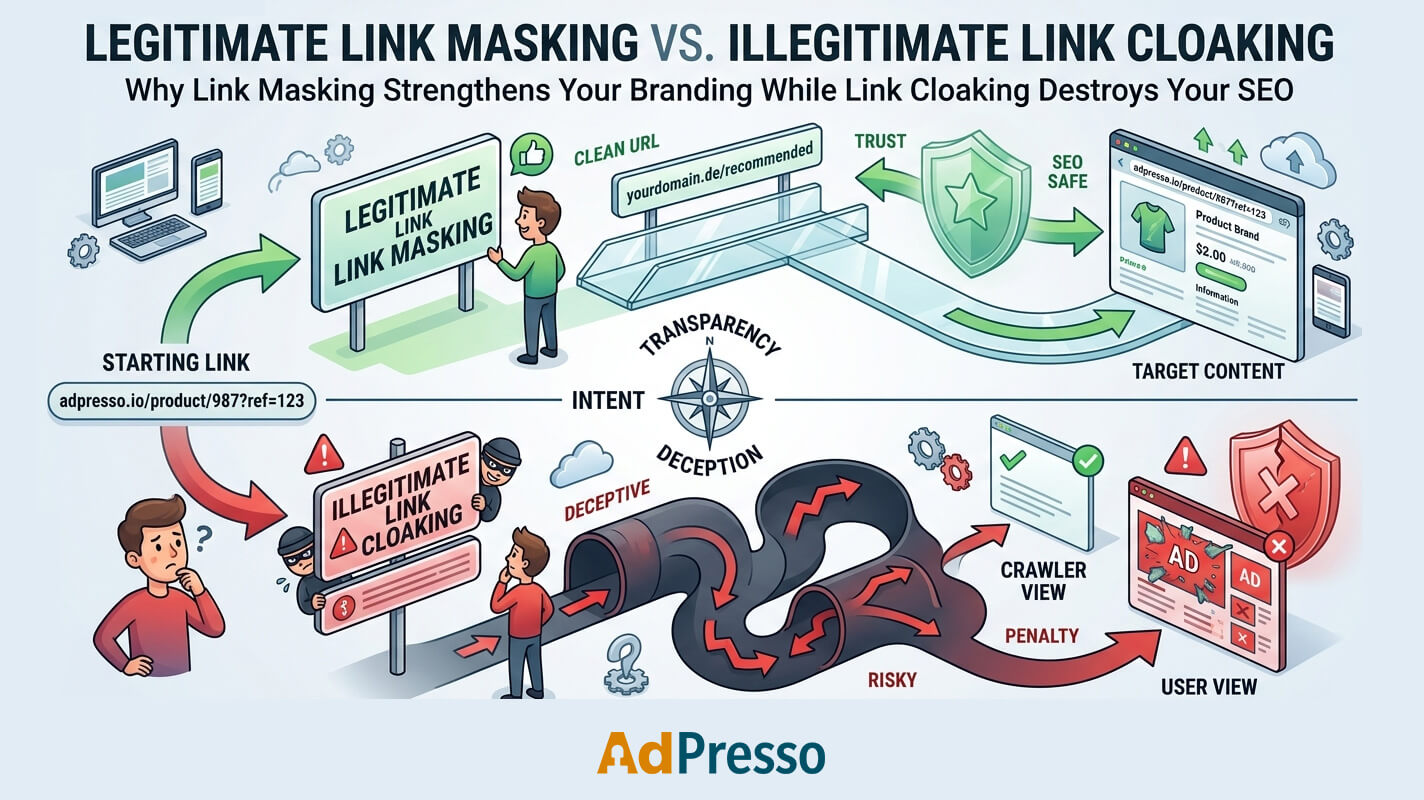
At first glance, link masking and cloaking look surprisingly similar. Both methods change how a link or redirect appears. That’s exactly why marketers mix them up so often.
The real difference is not visual. It’s about intent.
Link masking improves user experience. It creates cleaner branding and increases click-through rates. A masked link should look trustworthy, easy to share, and easy to understand. Users click the link and land exactly where they expect. Google has no problem with this setup. In many cases, a cleaner structure even improves UX signals across the site.
Cloaking follows a completely different goal. It intentionally manipulates what search engines see. The purpose usually involves hiding affiliate redirects, circumventing policies, or artificially influencing rankings. Google treats this as a serious violation of its guidelines.
The rule of thumb is simple. If search engines and users receive different content or different destinations, you are moving dangerously close to cloaking. If you improve a URL’s appearance while keeping the destination transparent, you are using legitimate link masking.
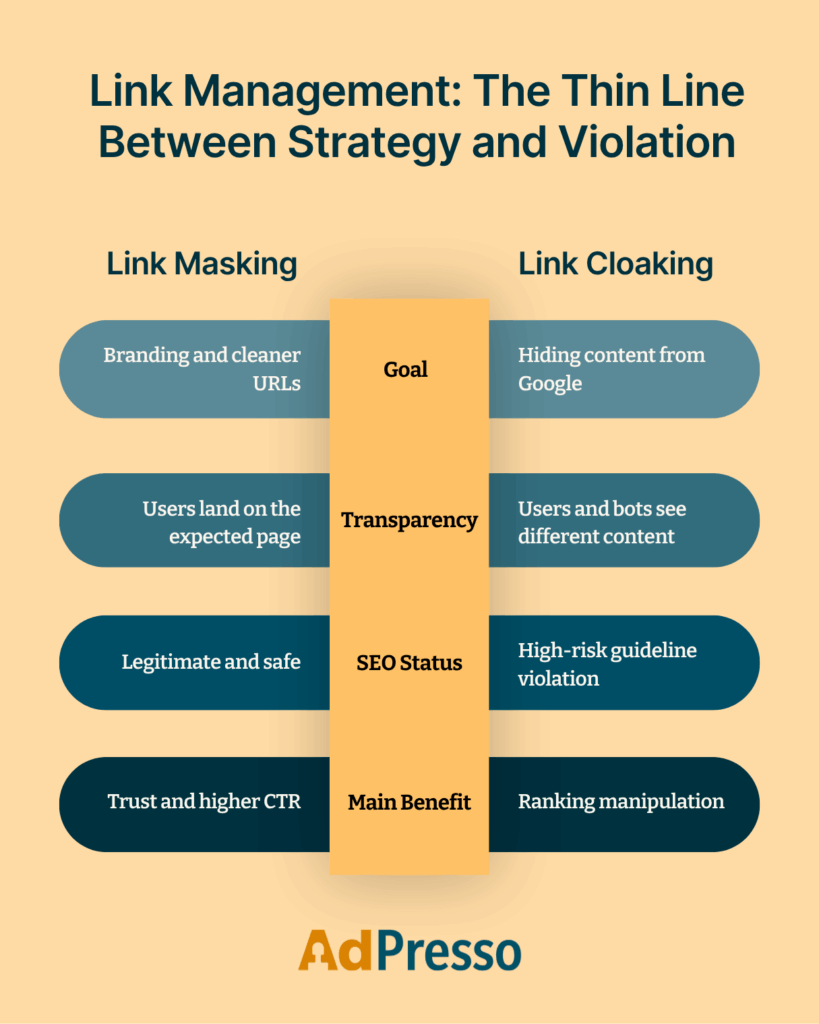
The easiest question is this. Does Google essentially see the same thing as your visitor?
If the answer is yes, you are usually on safe ground. Link masking only changes the structure or appearance of a URL. It does not change the actual content behind it.
A typical example would be a redirect from https://yourdomain.com/recommended to an affiliate offer. The user expects a recommendation and lands exactly there. Google can follow the same redirect path without issues. No deception. No manipulation.
Problems start once redirects or content dynamically change depending on the visitor. This method includes user-agent detection, aggressive referrer manipulation, or dynamically swapped content created specifically for search engine bots.
At that point, the line between clean marketing and problematic cloaking starts to blur.
Even legitimate link masking can become risky if implemented poorly. Complex redirect chains, meta-refresh redirects, or highly dynamic landing pages can create technical issues that mimic cloaking behavior.
Clean link masking should not feel complicated. That’s exactly where AdPresso comes in. Instead of relying on external redirect tools, manual shortlinks, or questionable cloaking scripts, AdPresso integrates professional link management directly into your WordPress workflow.
The setup is straightforward. AdPresso automatically generates masked URLs for your ads and affiliate links using your own domain structure. Long tracking URLs with affiliate IDs, campaign tags, or additional parameters become short, trustworthy links that your visitors actually want to click.
You can centrally manage your entire link structure from one place. Global settings allow you to define a default link base for all masked links. On top of that, you can create custom URL slugs for individual ads or campaigns whenever needed.
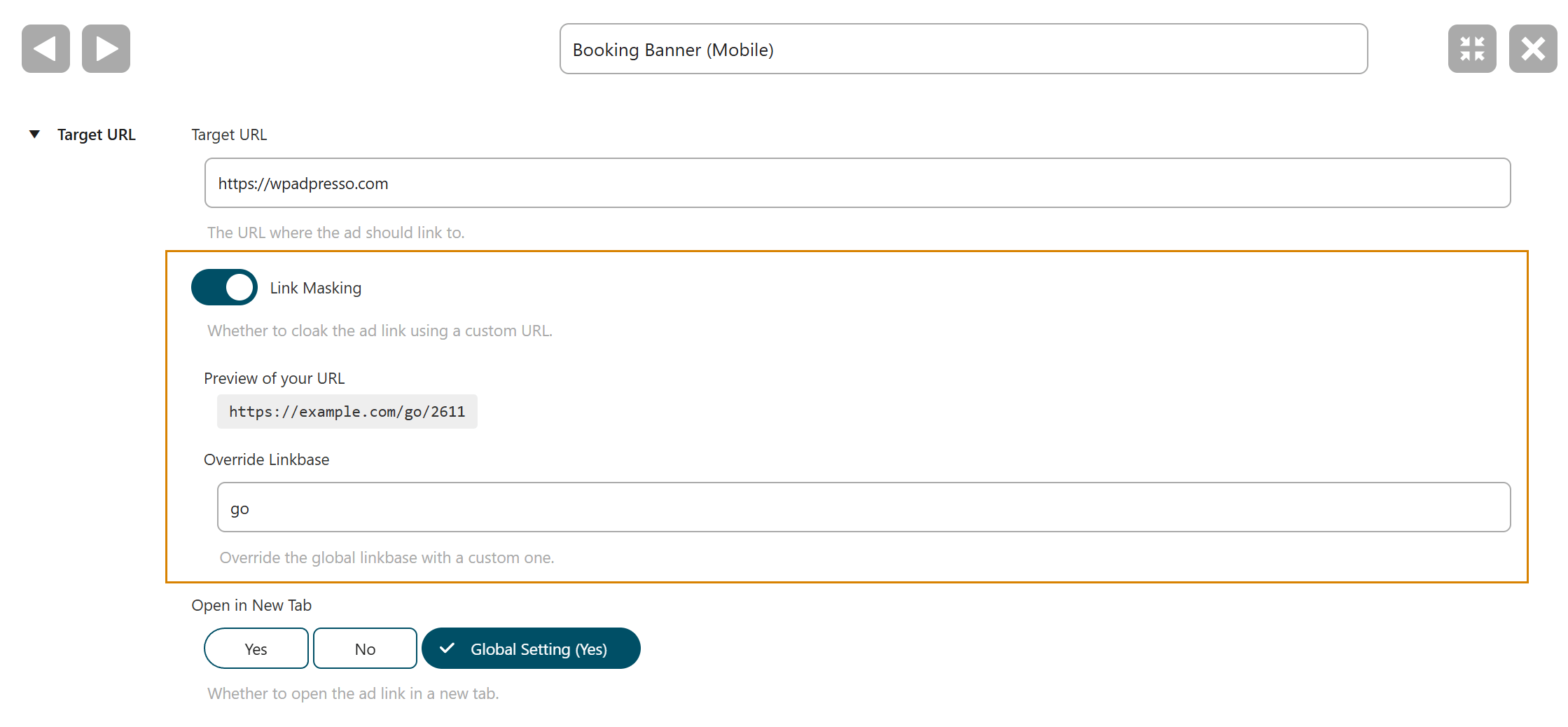
Most importantly, AdPresso does not use cloaking techniques, bot manipulation, or separate content delivery for search engines and visitors. Google sees the same redirects your users see, fully aligned with Google Search Essentials.