For years, digital advertising has relied heavily on user data. Browsing history, cookies, identifiers, audience segments, and behavioral profiles have helped advertisers decide which ads to show. That model is becoming harder to maintain. Privacy regulations are stricter, browsers are limiting tracking technologies, and users are increasingly aware of how much data can be collected about them.
Contextual advertising takes a different approach. Instead of asking who the user is or what they did on other websites, it looks at what the user is reading or watching right now.
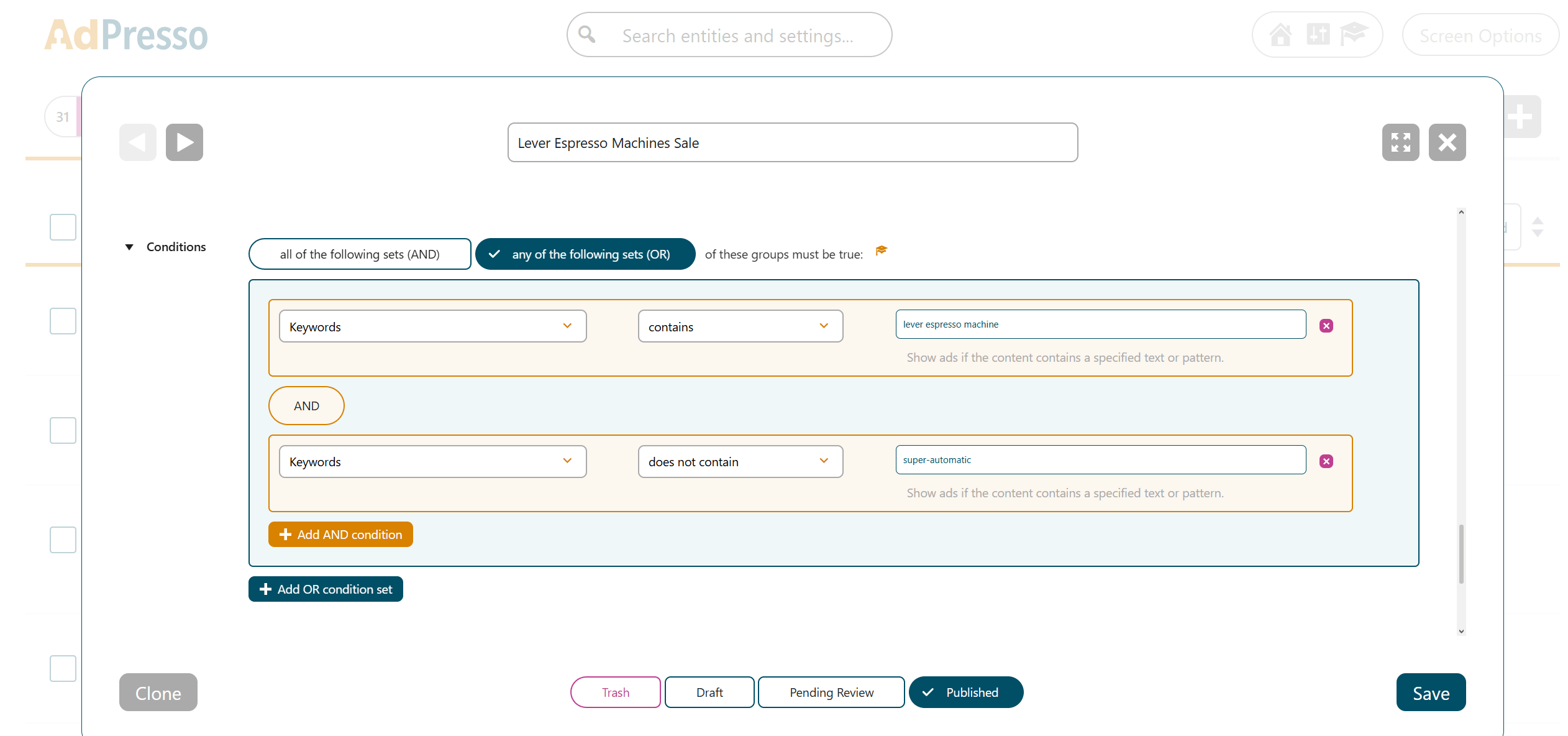
It is a form of advertising where publishers automatically match ads to the surrounding page content. By analyzing keywords, topics, and themes, contextual advertising helps ensure that ads are relevant to what the user is currently consuming and provides topical relevance without relying on the user’s browsing history or a personal advertising profile.
The basic idea is simple. A visitor reading an article about espresso machines might see a contextual ad for coffee equipment. Someone reading about hiking trails might see an ad for outdoor clothing. The advertising decision comes from the page context, not the visitor profile.
For publishers, this creates another way to make advertising relevant in an environment where behavioral targeting is becoming more difficult.

The simplest form of contextual targeting is keyword-based. An advertising system scans a page, identifies relevant terms, and matches them with predefined campaigns. But keyword-based contextual advertising can be misleading. A page mentioning “apple” could be about fruit, smartphones, nutrition, or a company’s latest product.
A more sophisticated approach is to understand the surrounding content rather than simply counting keyword matches. Other signals available on a page may include the headline, metadata, categories, tags, and other content elements.
The biggest attraction of contextual advertising is its relevance and its ability to create a strong connection between editorial content and monetization. This is especially relevant to publishers with large content archives. The same website can contain product reviews, news, tutorials, opinion pieces, and potentially sensitive subjects. Contextual classification lets advertisers account for these differences instead of treating the entire domain as one homogeneous audience.
This contextual relevance is also achievable without the same dependence on behavioral profiles, which helps publishers that must meet stricter privacy requirements. However, that does not mean that every contextual advertising implementation is automatically exempt from privacy rules or consent requirements. The technologies used around the ad delivery process still matter. A contextual campaign can be privacy-friendly, but publishers should not treat the term as a blanket GDPR exemption.
Contextual relevance and brand safety are closely related, but not the same. Contextual targeting asks whether the page’s subject is relevant to an advertising campaign. Brand safety asks whether the surrounding environment is appropriate for that advertiser.
Consider a news website covering aviation. An airline could reasonably want to advertise on articles about holidays, destinations, or flight planning. But an article about a fatal plane crash creates a very different advertising environment, even though the subject is still aviation.
This is why simple keyword matching has limitations. Seeing the word “flight” doesn’t tell an advertising system why it appears on the page or whether the surrounding content is suitable.

More advanced classification can therefore consider topics and the content’s broader meaning. Publishers can then distinguish between relevant content, content that requires caution, and content to exclude from a campaign.
The fundamental difference is where the targeting signal comes from. Behavioral targeting uses information about a user’s previous activity. Contextual targeting uses information about the current content environment.
The difference becomes particularly obvious with retargeting. A visitor might look at a pair of shoes on an online store and then see advertisements for those shoes on completely unrelated websites. The ad follows the user.
Contextual advertising does the opposite. The relevant ad follows the subject.
| Contextual targeting | Behavioral targeting | |
|---|---|---|
| Primary signal | Current page or content | Previous user behavior |
| Typical data | Keywords, topics, page context | Browsing history, audience data, identifiers |
| User profile | Not required for contextual relevance | Usually based on an audience profile |
| Relevance | Based on the current environment | Based on past activity |
| Privacy approach | Can work without cross-site behavioral tracking | More dependent on user data and tracking |
| Typical example | Running shoe ad beside a running article | Running shoe ad shown because the user previously visited a sports store |
That distinction can also affect how advertising feels to users. Seeing an outdoor equipment ad while reading about hiking is relatively easy to understand. Seeing the same product repeatedly across unrelated websites because a user looked at it days earlier can feel much more intrusive.
Context is powerful, but it is not perfect. Language is complicated. Words can have several meanings, articles can contain irony or sarcasm, and a page can discuss a sensitive subject without endorsing it.
This becomes particularly difficult for publishers operating in narrow niches. A generic category such as “sports” is easy to identify. A highly specialized topic may require a much more precise taxonomy to produce useful advertising matches.
Contextual relevance also differs from actual purchase intent. Someone reading an article about laptops may be researching a purchase. Still, they may also be a technology journalist, a student doing research, or someone who enjoys reading about hardware. Context provides a useful signal, not certainty about what a particular visitor will do next.
The best results in contextual advertising usually come from good content structure and sensible ad targeting. Clear topics, meaningful headlines, useful metadata, and well-organized content make it easier to understand the environment where an ad is displayed.
WordPress publishers already have an advantage here because their content is commonly organized through posts, pages, categories, tags, and other structural elements. Ad management plugins like AdPresso can then add additional contextual advertising rules to decide where and when an ad should appear.