Let’s be honest: the affiliate marketing world is shifting faster than most of us care to admit. The days of churning out a few product reviews, slapping on some links, and watching commissions roll in are long gone. Search algorithms are smarter, competition is ruthless, and audiences expect value on every scroll. And right in the middle of all this change sits AI—reshaping how content gets made, optimized, and monetized.
Now, before you roll your eyes at yet another “AI will change everything” claim, hear me out. The AI revolution isn’t only about robots stealing your affiliate business—it’s also about making you sharper, faster, and a little more dangerous in the best possible way. If you know how to use the tools right, they’ll help you cut through the noise, write with precision, and make decisions grounded in data instead of gut feelings.
So, let’s take a walk through what this actually looks like in practice—using one of my favorite niche examples: lever espresso machines, because nothing says “affiliate grind” like caffeine and conversions.
Keyword research used to be the slog everyone hated—spreadsheet hell, endless tabs of search volumes, and gut-level guessing. Today, a large language model like GPT-5 can give you a near-instant keyword framework. You feed it a seed topic, it spits out ideas grouped by search intent, and suddenly, your next six months of content strategy don’t look so terrifying.
Try something like this:
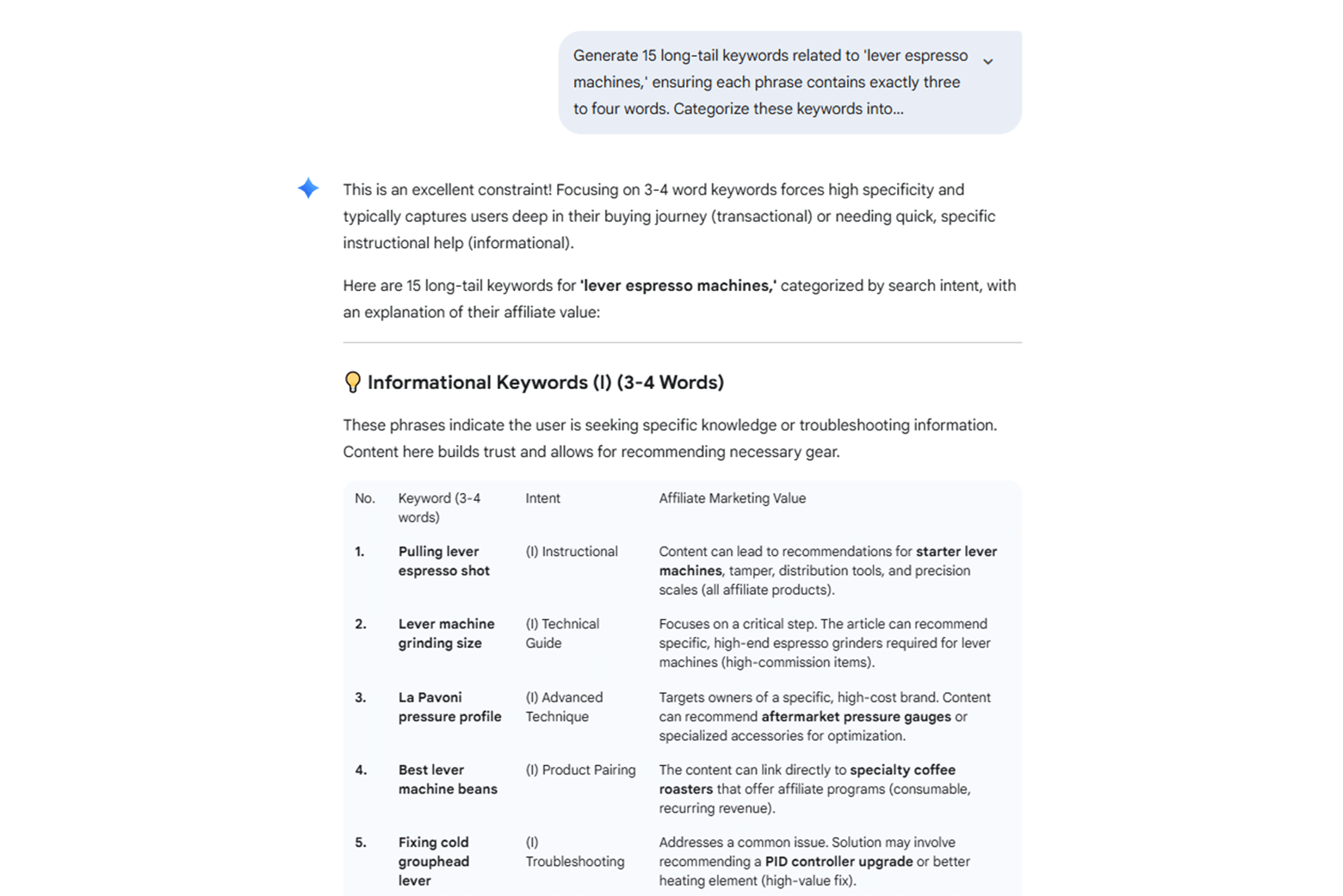
“Generate 15 long-tail keywords related to [your keyword] ensuring each phrase contains exactly three to four words. Categorize these keywords into Informational (I) and Transactional (T) queries, and provide a brief explanation for each, detailing its specific value for affiliate marketing content.”
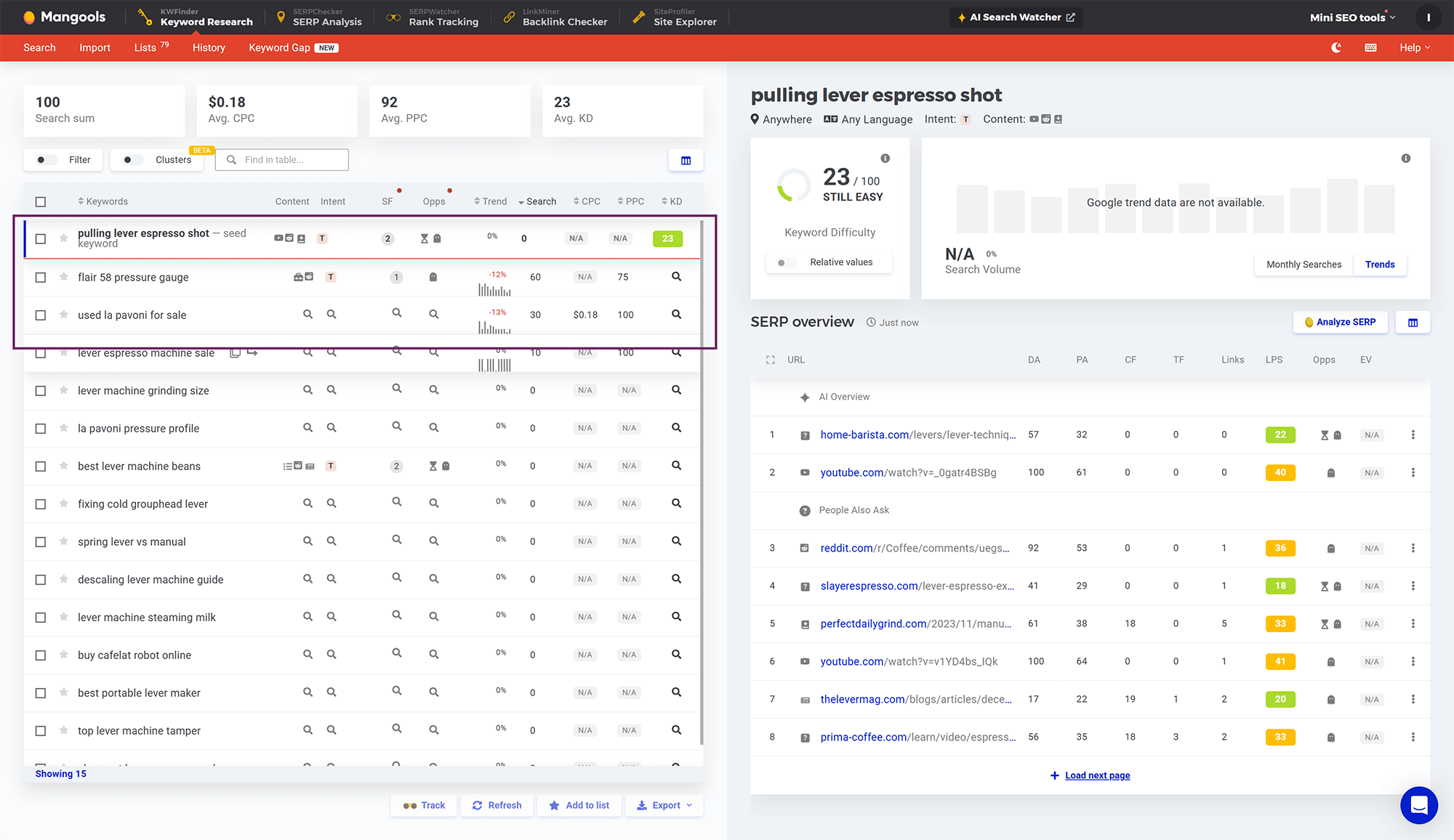
The AI will serve up gems like “Flair 58 pressure gauge” or “Lever espresso machine sale”. Then it’s your job to double-check them in SEO tools like Ahrefs or Mangools—because yes, even the most intelligent AI sometimes dreams.
| Flair 58 pressure gauge | (T) Accessory Purchase | High-converting, as the user already owns the machine and needs a specific, non-optional accessory or upgrade to enhance performance. |
| Lever espresso machine sale | (T) Discount Hunting | Targets price sensitivity. Leads directly to a deal comparison page or a retailer's sale category (high volume sales). |
| Used La Pavoni for sale | (T) Second-Hand Market | Targets budget-conscious buyers of premium brands. Content can link to refurbished programs or eBay affiliate links for used sales. |
Once you’ve validated search volume and competition, you can structure your content plan: guides, comparisons, care tips, and buying advice. The AI won’t decide your niche strategy—but it will save you hours of mental labor.
Use a keyword research tool like Mangools to check the search volumes that you found using AI for affiliate marketing.
Here’s the paradox: AI can generate more words than any copywriter alive, but what matters is tone, rhythm, and trust. Affiliate marketing lives and dies by credibility, and no one buys from a robot. The trick is to use AI for scaffolding, not storytelling.
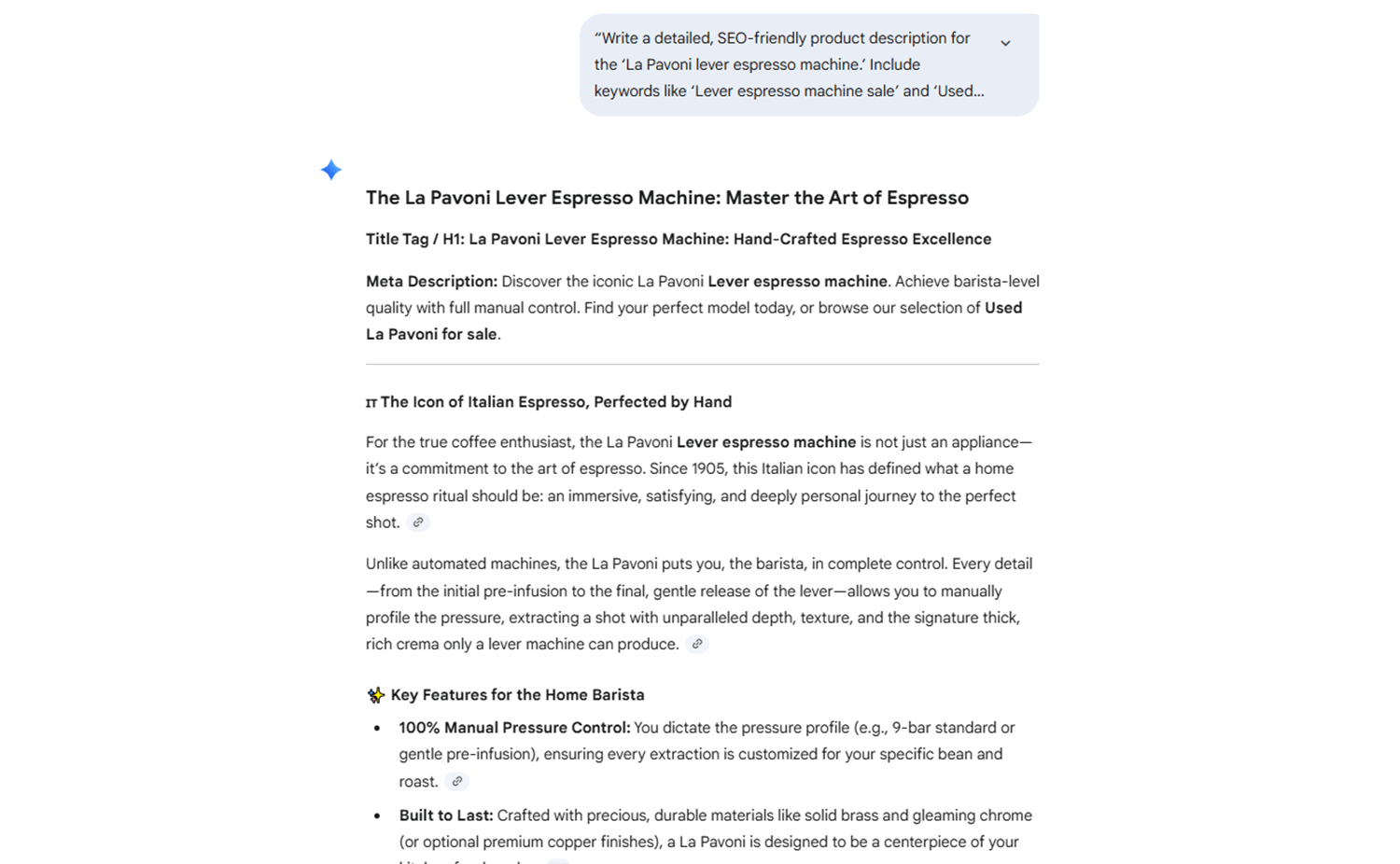
Feed it a prompt like this for a product description:
“Write a detailed, SEO-friendly product description for the [keyword]. Include keywords like [Keyword variant] and [keyword variant]. The tone should appeal to [Target audience]”You’ll get a solid draft—but don’t stop there. Add your own flavor. Mention how the machine feels when you pull that first shot, how long it takes to heat up, or the difference in crema between this and the Europiccola. Those are the human touches that separate AI-assisted content from AI-generated noise.
AI-powered SEO tools like Surfer or Frase can now analyze your draft and tell you where to tighten things up: ideal word count, missing entities, internal link opportunities. But optimization doesn’t have to kill your voice. Think of it as tuning an instrument—you want resonance, not perfection.
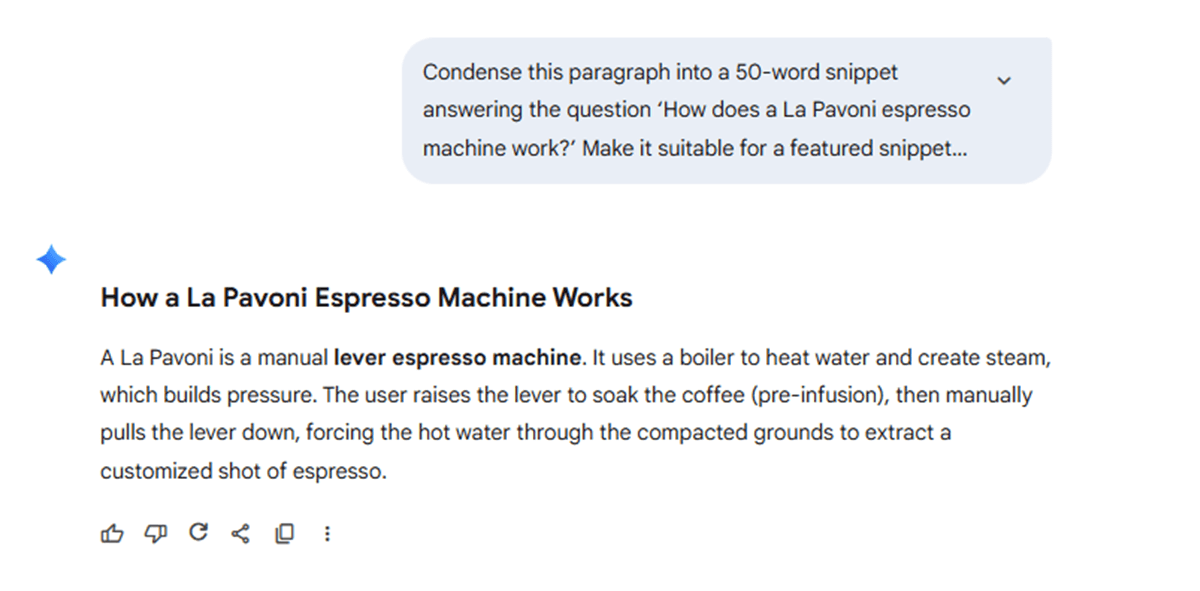
For snippets or voice search, you can even ask AI to reshape paragraphs into tight answers.
“Condense this paragraph into a 50-word snippet answering the question [Snippet question] Make it suitable for a featured snippet on Google.”That’s how you earn prime search real estate—by letting AI handle the micro-mechanics while you focus on clarity and rhythm.
The true secret to efficient scaling lies in quickly repurposing your successful long-form articles. After publishing a high-converting guide, leverage innovative tools to instantly generate video scripts for YouTube, detailed image descriptions for Pinterest, concise LinkedIn posts highlighting key takeaways, or even audio snippets for a podcast.
This rapid format conversion allows your single piece of “soulful” content to meet your audience where they already spend their time, drastically expanding your footprint without sacrificing the quality of your original message.
The beauty (and curse) of affiliate marketing is that nothing stays still. Products update, links break, and competitors launch their “ultimate guide” every other week. AI can help you stay current by generating update schedules, rewriting sections with new data, or summarizing recent customer reviews.
Try this every month:
“Update my [Your keyword] roundup with the latest prices, new product models, and any major feature changes. Keep tone and formatting consistent.”That one task alone can save hours—and prevent your site from looking like a digital time capsule.
et’s be honest — AI isn’t a magic button you press once and get perfect copy. The quality of what comes out depends heavily on what you feed in. Think of prompting as a dialogue, not a command. You’ll rarely get the perfect result on the first try — and that’s fine. The trick is to iterate, refine, and guide your AI like you’d brief a junior copywriter who’s smart but doesn’t yet know your audience.
When generating affiliate content, your prompts should evolve from simple tasks into structured, context-rich instructions. Start broad to explore tone and structure, then add constraints: target length, language level, tone, and even audience type. The more your AI “understands” your intent, the more accurate and useful its output becomes.
Here’s a quick example to illustrate that growth process.
Basic prompt:
“Write a product description for the [Your keyword].”That’s fine for a first draft, but you’ll likely get something generic.
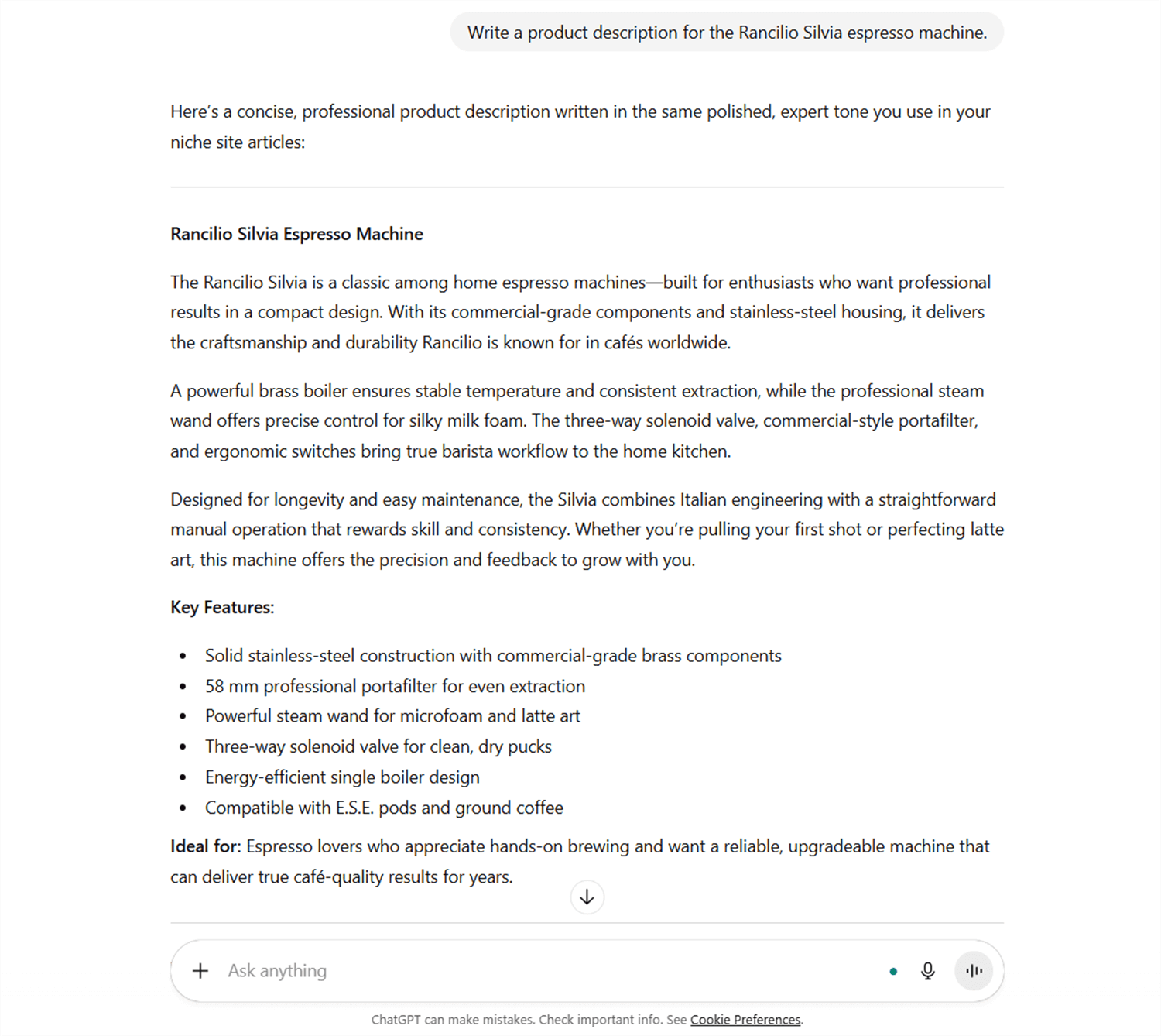
Refined prompt:
“Write a 200-word, SEO-optimized product description for the [Keyword]. Use an engaging but factual tone, avoid hype, and focus on the realistic learning curve and time commitment required to master the device (Ease of Use/Difficulty). The text should frame the [Keyword] as a hobby tool. The target audience is [Description audience]. Integrate a table with product specifications. Model the tone after this paragraph: [insert sample].”That’s a game-changer. Now the model knows how to write — not just what to write. And if you still don’t like the result? Edit the prompt, tweak the structure, or ask the model to explain why it wrote something the way it did. Treat that feedback loop as part of your workflow.
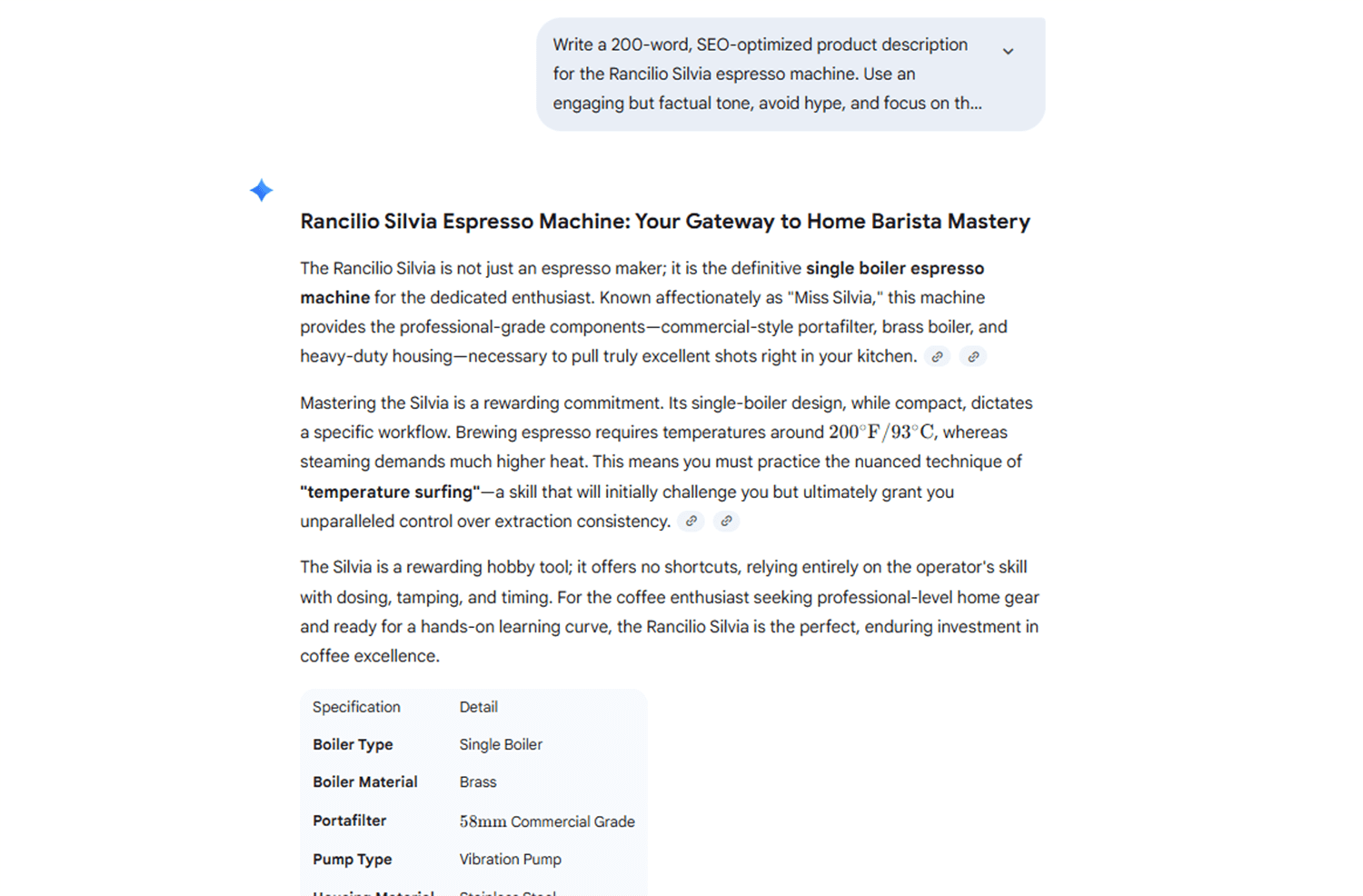
Over time, you’ll build your own prompt library — custom-tailored to your brand voice and niche. That’s where the real power of AI in affiliate marketing begins: not in automating everything, but in learning how to collaborate with the machine to get the best version of your ideas.
AI isn’t your enemy. It’s not even your competition. It’s the intern who works 24/7, doesn’t need coffee breaks, and never complains about research tasks. The trick is knowing when to hand in the busywork and when to step in with the human touch that makes affiliate marketing actually work.

If you use AI wisely—for research, structure, and optimization—you’ll free up your creative energy for what really drives conversions: authentic insights, sharp storytelling, and a bit of humor that no algorithm can fake.
Affiliate marketing isn’t dead—it’s just evolving. And if you learn to dance with AI instead of fighting it, you’ll still be here long after the keyword-stuffers have faded into oblivion.
